
Morgan Barbeau, April 2026
Tucked away on Mexico’s Costa Maya, Mahahual sits on the Caribbean side of the Yucatán Peninsula—a laid-back fishing village that hasn’t yet succumbed to the resort sprawl of Playa del Carmen or Cancún. For fly anglers willing to venture beyond the all-inclusive crowds, Mahahual offers something increasingly rare: stunning, accessible flats you can fish on your own terms.
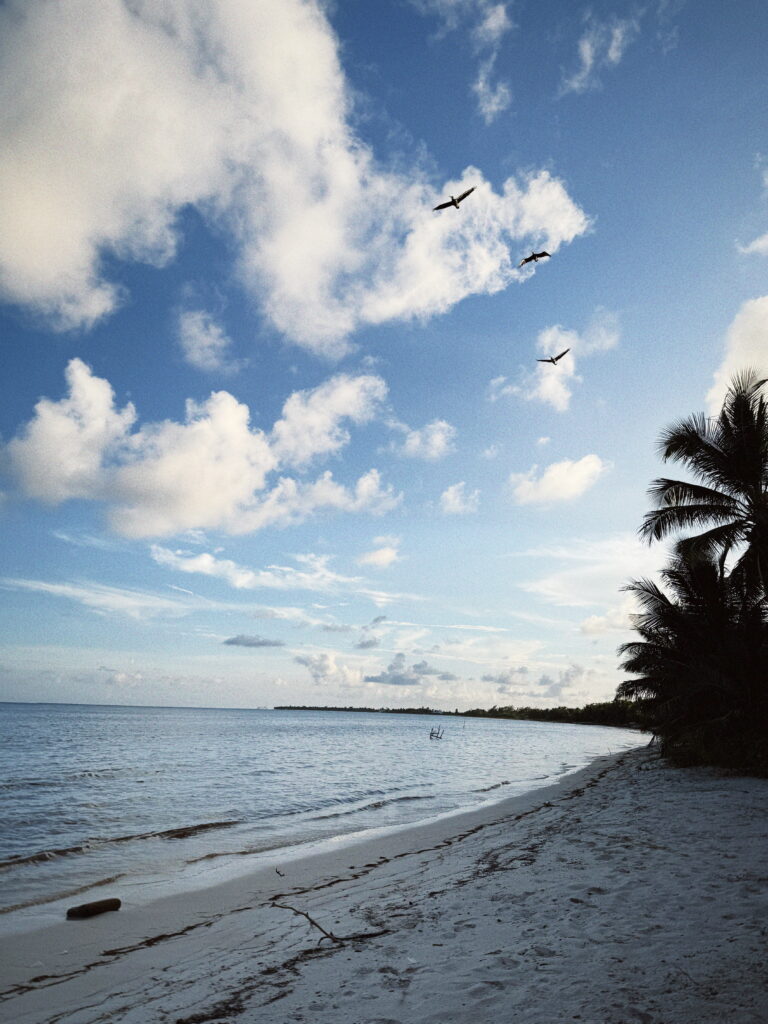
Mahahual is located roughly 2.5 hours south of Tulum and about an hour north of the Belizian border. The town faces east into the Caribbean, with miles of shallow flats extending both north and south along the coast. Unlike some premier fly fishing destinations that require boat access or expensive lodge packages, Mahahual’s productive water starts steps from shore.
The coastal shelf here is gentle and expansive. You can wade out hundreds of yards in knee-to waist-deep water, covering tons of water without a skiff. This accessibility is gold for DIY anglers working on a budget or those who simply prefer the challenge of fishing on foot.
Getting there & staying close to the water
Flying In
Most anglers fly into Cancún International Airport (CUN), which offers the most international connections and competitive pricing. From there, Mahahual is about a 4.5-hour drive south along Highway 307.
Alternatively, Chetumal International Airport (CTM) sits just an hour from Mahahual and can save driving time, but flight options are limited and often more expensive. Unless you’re connecting through Mexico City or finding a direct regional flight that makes sense, Cancún remains the practical choice.
Ground Transportation
Rental Car (Recommended).
A rental car provides the freedom to explore different sections of coastline, move with the conditions, and access grocery stores for supplies. The drive from Cancún is straightforward—Highway 307 is well-maintained, though you’ll want to depart early to avoid driving after dark when wildlife and aggressive speed bumps (topes) become hazards.
Budget $40-60/day for a basic sedan. Upgrade to an SUV if you plan to explore rougher coastal access roads, though it’s not essential for reaching most productive water.
Shuttle Services
Shared shuttles and private transfers are available from Cancún (around $200-300 for private service). This works if you’re staying in one location and can walk to fishing spots, but limits your ability to chase conditions or explore.
Lodging Considerations
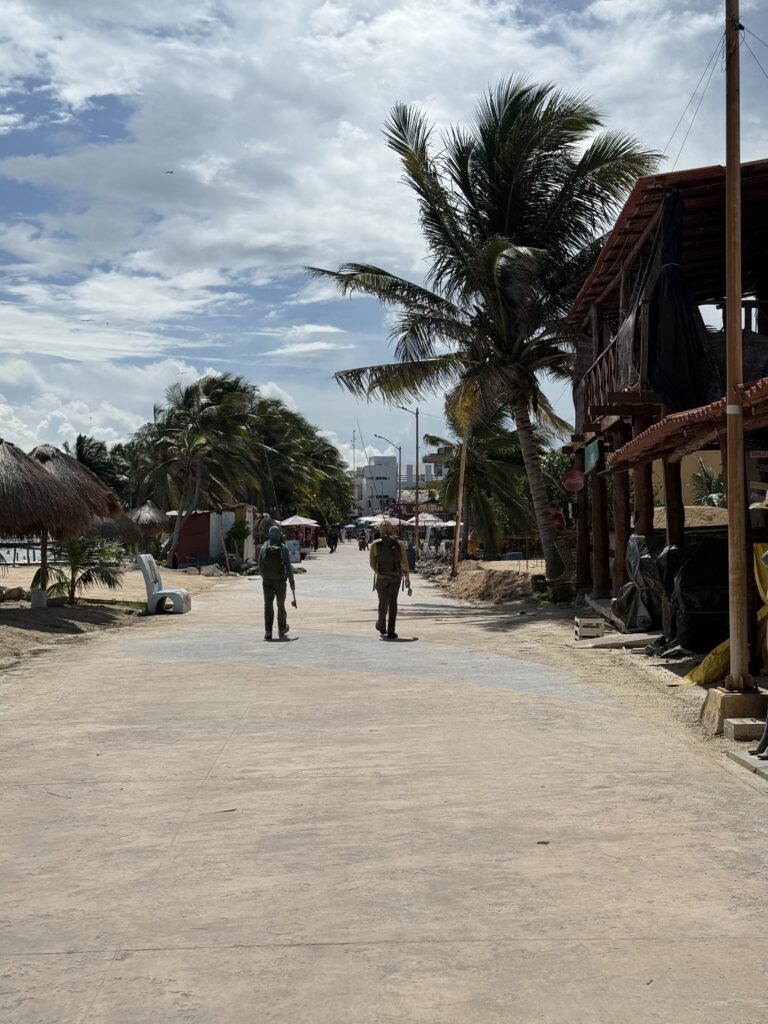
There are tons of small hotels and boutique properties that line the beachfront boardwalk in Mahahual proper, as well as plenty of Air BnBs in and around the Mahahual area to accommodate any budget.
It’s worth considering places that have safe storage for your gear, easy beach access or parking if you plan to drive other places, and freshwater access to rinse rods and reels.
Reading the Water: Finding Productive Flats Without a Guide
Your ability to read water and spot fish will be tested when fly fishing on your own. In Mahahual, understanding bottom composition, depth changes, and tides will help your chances of success.
Types of Water You’ll Encounter
Sandy Flats
Light-colored sand bottoms provide the best visibility for spotting fish. Bonefish cruise these areas hunting crabs and shrimp. Look for subtle depressions, potholes, or darker patches where prey
concentrates.
Turtle Grass Beds
Darker green patches of turtle grass hold baitfish, shrimp, and crustaceans. Fish tend to work the edges where grass meets sand.
Coral Edges and Channels
Coral formations create structures that hold snappers, jacks, and occasionally permit. Be careful wading near coral (both for safety and conservation). Channels between coral heads funnel current and concentrate bait. Fish the current seams and edges where predators ambush prey.
What “Good Water” Looks Like
Even without seeing fish, you can identify productive zones:
Subtle Depth Changes
A drop from ankle-deep to knee-deep water creates an edge. Fish patrol these transitions. Watch for darker blue water indicating deeper channels.
Current Seams
Where moving water meets still water, or where two currents collide, bait gets disoriented. On Mahahual’s flats, incoming tides push water across the flats toward shore, creating feeding opportunities.
Bait Movement
Small baitfish showering at the surface, nervous water, or diving birds all signal predators are working. If you see bait activity, get there.
Tides and Wind Considerations
Tides: Tides play a huge role in fish behavior and presence on the flats. While there certainly aren’t hard and fast rules around it, generally speaking, fish will come in and leave with the tide. The bigger the tide swing, the more food gets kicked up and brings in feeding fish.
Wind: East or northeast winds can cloud the water by stirring sediment and stacking waves on the beach. Southeast winds often bring clearer conditions. If you wake up to howling wind, fish the lee side (western side of points or protected coves) or adjust your timing to calmer morning hours.
When to Move vs When to Slow Down
If you’re not seeing fish or signs of life after 30-40 minutes in a spot, move. Cover water until you find activity. Once you locate fish or productive structure, slow down and work the area methodically. Pay attention to what’s producing: a specific grass edge, a certain depth, a chokepoint, a particular bottom transition. Repeat that pattern in similar areas.
Target Species for DIY Fly Anglers in Mahahual
Managing expectations is crucial for DIY saltwater fly fishing. While anything’s possible, you’re likely not going to hook a permit on every outing or see endless bonefish tails day after day. But Mahahual offers realistic opportunities for several species that will absolutely bend your rod.
Primary Species
Bonefish
The bread and butter of Caribbean flats fishing. Mahahual’s bonefish aren’t enormous (most run 2-4 pounds, with occasional fish to 6 pounds), but they’re present and willing. When water clarity allows, you’ll spot them cruising sand flats or tailing in grass.
Permit (Opportunistic)
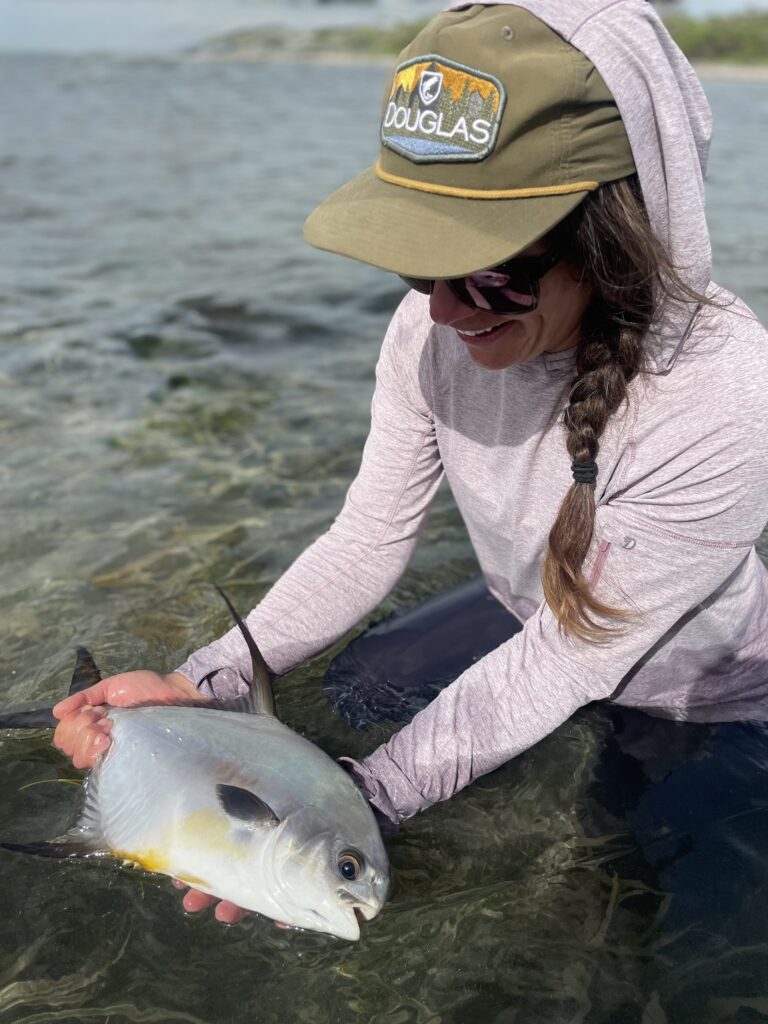
Let’s be honest: permit are difficult everywhere, and DIY permit fishing is expert-level challenging. You might encounter permit cruising flats or working coral edges.
Tarpon
North of Mahahual, less likely in town, you can find tarpon rolling close to shore and get some good shots at them. There are also several lagoons that hold tons of aggressive juvenile tarpon, a great option to try if you’ve got access to a kayak or paddle board.
Trigger Fish
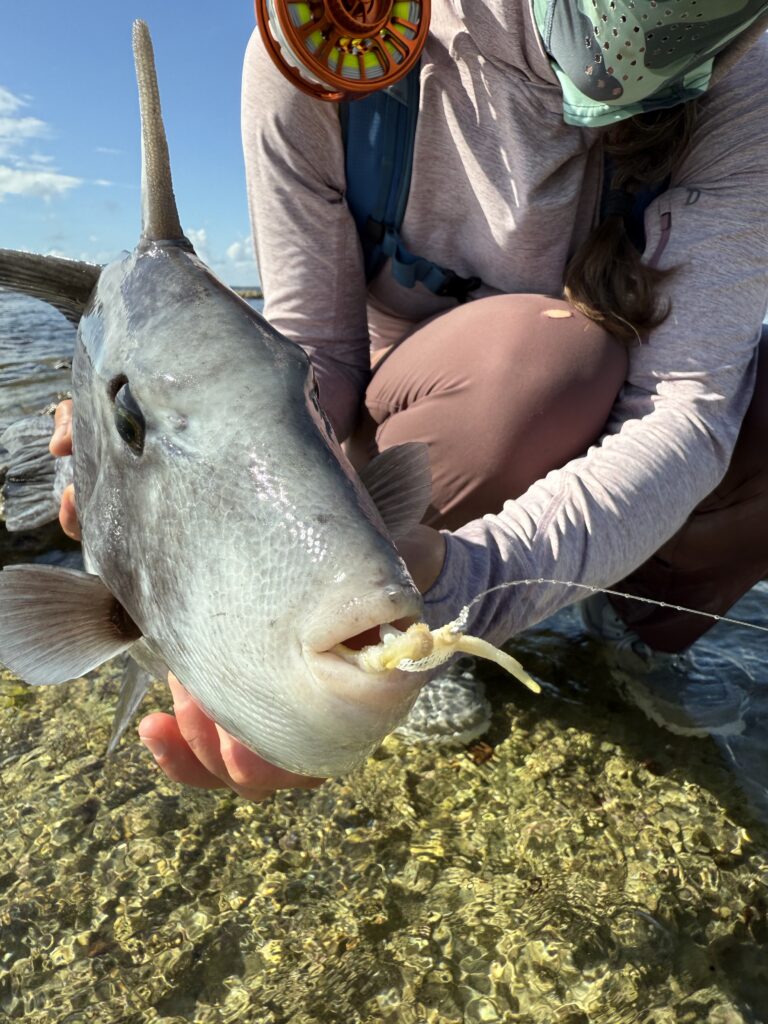
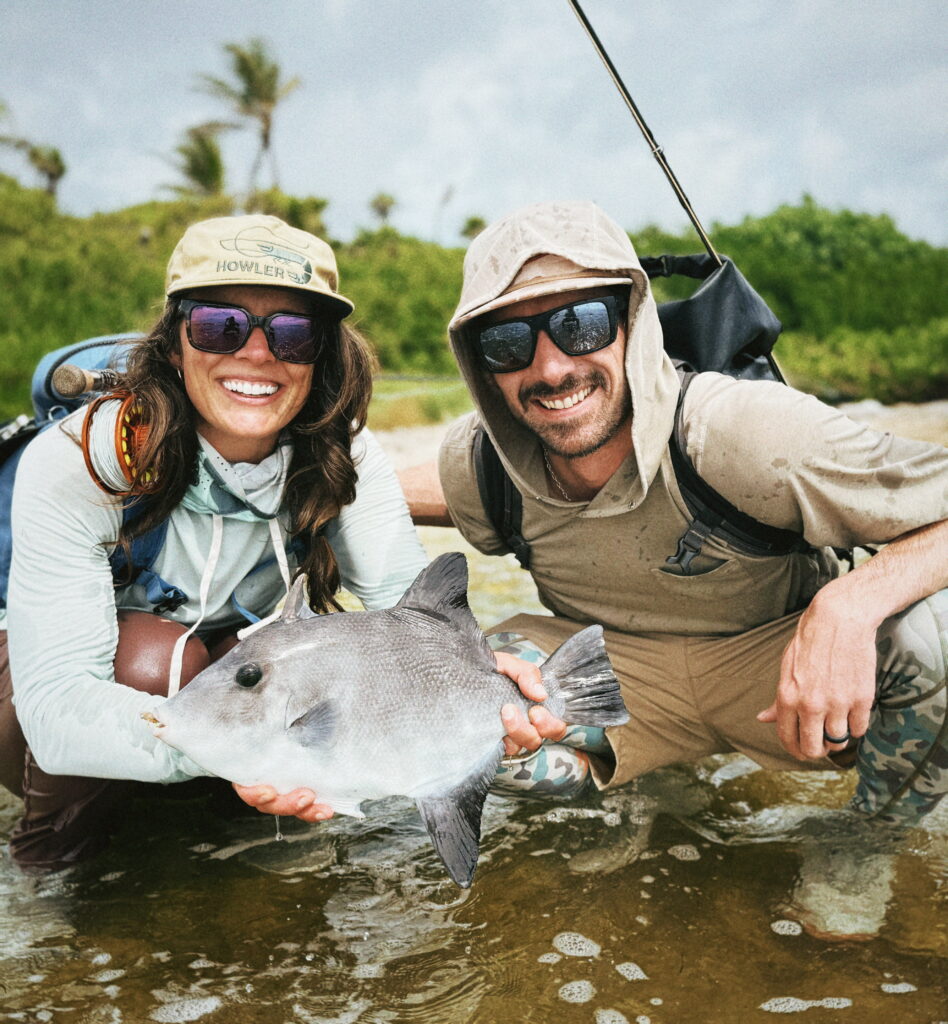
These goofy fish are an absolute blast to target. They can be spooky and discerning, and with their big buck teeth it can be challenging to get a good hook set. But if you can convince one to eat, hold on and enjoy the fight!
Snapper (Mangrove, Mutton, Cubera)
Underrated and often overlooked by fly anglers obsessed with bones and permit, snappers are aggressive, fun fighters that readily eat flies. Mangrove snapper work the grass beds and coral heads. Mutton snapper cruise flats and channels. They’re realistic targets for wading anglers and provide excellent action when conditions aren’t ideal for sight fishing.
Jacks
When jacks are around, you know it. They crash bait, create surface commotion, and pull drag like freight trains. Not always present, but when they move onto the flats, it’s game on. Any baitfish or popper pattern will get crushed.
Barracuda
Abundant and aggressive. Barracuda aren’t everyone’s favorite (their teeth can shred tippet and flies), but they’re willing eaters and provide explosive strikes. Wire tippet recommended if you’re targeting them specifically, though you’ll hook them on standard leaders too.
Fly Rods, Reels & Lines for a Mahahual Trip
Gear choices for saltwater fly fishing balance power, versatility, and conditions.
Recommended Rod Weights
7 or 8 Weight for Bones and Snapper
A 7 or 8-weight fast-action rod handles the majority of fish you’ll encounter. It delivers flies accurately in moderate wind, and allows for a delicate presentation for bonefish.
9 Weight for Wind and Larger Fish
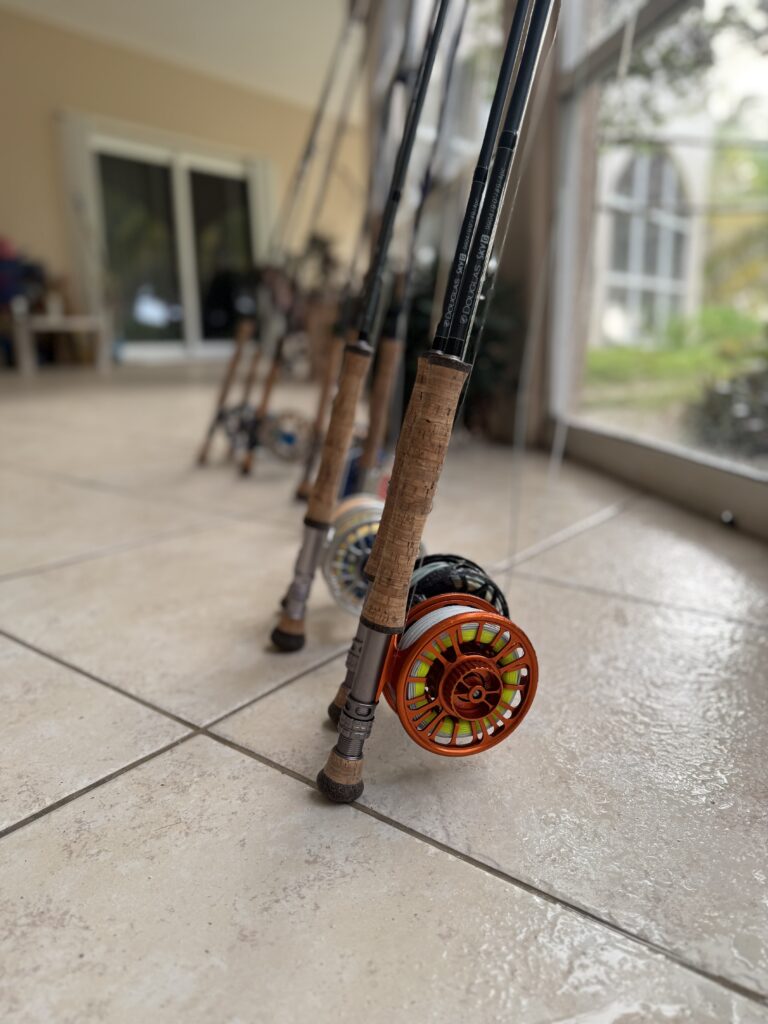
The Caribbean coast can blow. On windier days, an 8-weight becomes a workout. A 9-weight punches through wind more effectively and gives you a bit more backbone against some larger fish. We will typically have an 8 weight rigged with a shrimp pattern, and a 9 weight rigged with a crab, which allows for a quick rod swap versus having to re-rig in the moment.
10 Weight for Tarpon, Jacks or Barracuda
If you have room in your bag and plan on targeting larger species, it’s worth bringing a 10 weight along that you can have ready with a baitfish pattern or bite wire for barracuda.
Why Fast-Action Rods Help
Fast-action rods load quickly, generate higher line speed, and cut through wind better than softer actions. In saltwater fly fishing, you’re often making quick casts to moving fish or punching flies into breeze—fast action delivers.
The Douglas Sky G is a fast-action rod that has the backbone you need to punch through high winds, and because of the ultra lightweight materials its crafted from, you’ll be able to stay on the flats sun up to sundown. Not to mention, they’ve got a ridiculously great warranty program in the event you come home with a damaged rod (it happens).
Reel Considerations
Sealed Drag Systems
Saltwater is corrosive. Sand, salt, and grit destroy unsealed reels. Invest in a reel with a fully sealed drag system designed for saltwater. Your reel will last years instead of months.
Corrosion Resistance
Anodized aluminum construction resists corrosion better than cheaper materials. Rinse your reel with fresh water after every session, but start with a reel built to handle salt exposure.
Drag and Capacity
Bonefish make screaming runs. Even small bones can take you into your backing. Your reel needs smooth drag and at least 150 yards of 20-30 lb backing, either dacron or GSP.
Fly Lines
Tropical Floating Lines
Standard temperate-climate fly lines get soft and sticky in tropical heat. Use lines specifically designed for warm water (tropical or saltwater designation). These lines maintain stiffness and shoot cleanly in 80-90°F heat.
Weight-Forward Tapers
Weight-forward floating lines designed for saltwater deliver heavier flies and turn over leaders in wind. Specialty bonefish tapers are excellent but not essential—a standard tropical WF floating line works great.
Line Color Visibility
You’ll spend time managing line in bright sun and glare. Light-colored lines (sand, yellow, light blue) are easier to track than dark lines. Some anglers prefer clear or aqua tips for stealth, but in my experience, line color matters less than presentation and leader selection.
Leaders, Tippets & Knots That Hold Up
Saltwater fly fishing puts stress on connections that freshwater trout fishing never approaches. Leaders and tippets designed for bass or rainbows will fail when a bonefish makes a 60-yard run across coral rubble.
Leader Length and Taper
9-Foot Leaders Minimum
Start with a 9-foot tapered leader specific for saltwater. In very clear, calm conditions, extending to 10-12 feet can help for spooky fish. If conditions are really windy, you may need to cut it back a bit in order to turn over your fly effectively. Play around and find what works for you.
Knotless Tapered Leaders
Pre-made knotless tapered saltwater leaders in 12-16 lb test provide clean turnover and easy tippet attachment. Rio, Umpqua, and Scientific Anglers all make quality saltwater leaders.
Tippet Sizes by Species
Bonefish: 10-12 lb fluorocarbon tippet. Strong enough to land fish quickly (important for catch-and-release survival), light enough for natural fly movement.
Permit: 16-20 lb fluorocarbon (if you’re fortunate enough to hook one).
Jacks/Barracuda: 16-20 lb, or add wire tippet for barracuda if targeting them specifically.
Preventing Abrasion
Check your tippet regularly for abrasion, especially after fighting fish near coral. Nicked tippet will fail on the next hookup. Carry spare tippet spools.
Flies
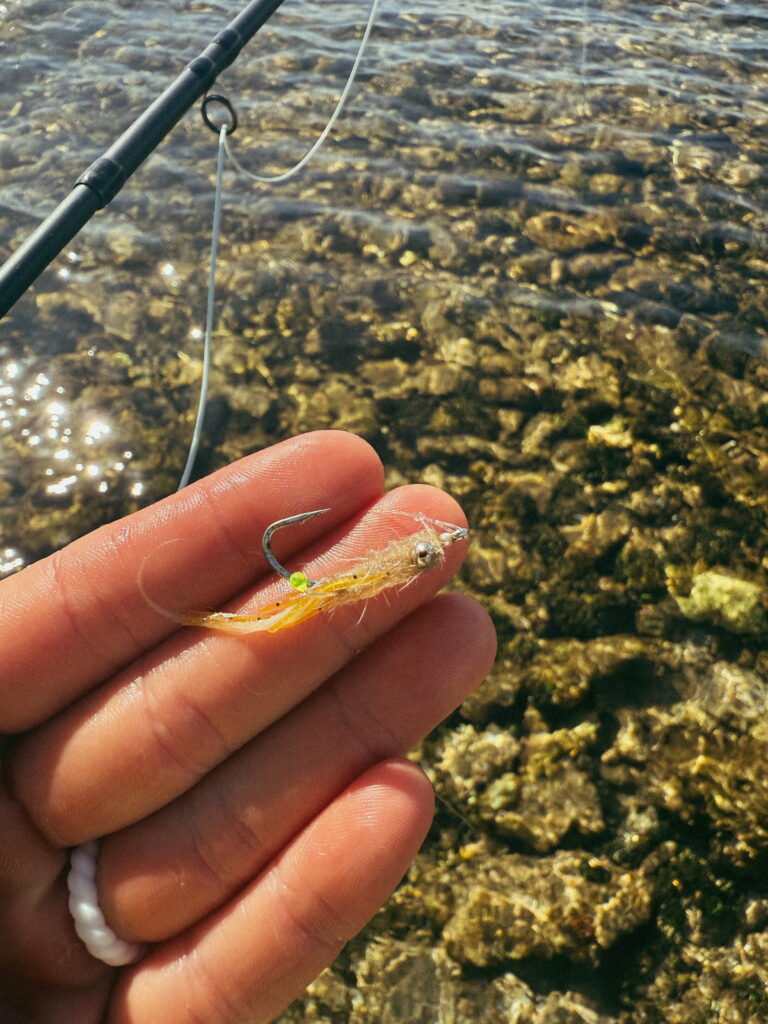
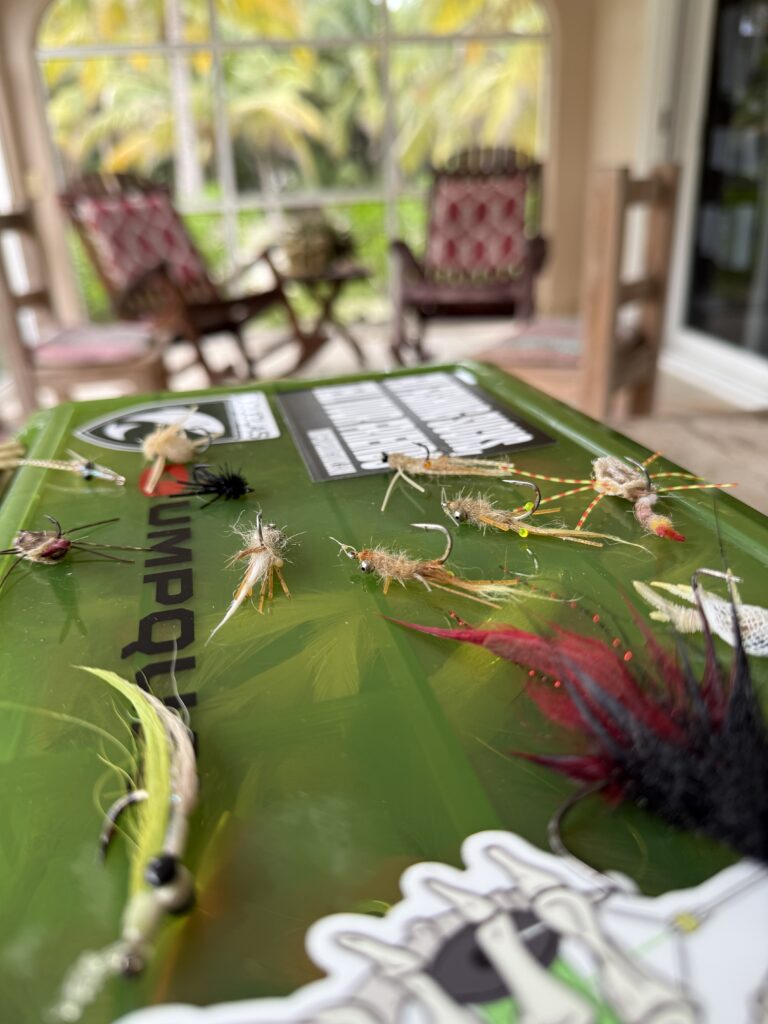
You don’t need a massive fly arsenal. A focused selection of proven patterns will handle everything Mahahual throws at you.
Bonefish & Permit Flies
Essential Patterns (sizes #6 to #2):
● Gotcha (tan, pink, chartreuse)
● Crazy Charlie (tan, pink, pearl)
● Bonefish Bitters (tan, brown)
● Mantis Shrimp
● Merkin Crab (tan, brown)
● Casa Blanca Crab
Carry flies in varying weights: unweighted for very shallow water, bead-chain eyes for general use, and lead eyes for deeper areas or current.
Tarpon, Jacks & Barracuda
Clouser Minnow (chartreuse/white, tan/white) is your workhorse. Sizes #4 to #2/0. Also carry:
● Deceivers (white, chartreuse)
● Small poppers (#2 to #1/0) for topwater action
● Needle Fish Flies
● Cockroach (#1/0)
● Gummy Minnows
Rust Prevention
Saltwater destroys hooks quickly. Rinse flies after each session, dry completely before storing, and use breathable fly boxes. Even “saltwater” hooks will rust if stored wet.
Spotting Fish & Making the Shot
When water clarity allows for sight fishing, your success depends on spotting fish and making accurate presentations.
Spotting Techniques
Don’t just look for fish—look for:
● Shadows on the bottom
● Tails breaking the surface
● Nervous water or subtle wakes
● Color changes (dark shapes on light sand)
Scan zones from near to far. Quality polarized sunglasses are essential.
Sun Positioning
Fish with the sun at your back when possible. You’ll see into the water clearly, and fish won’t see your silhouette as easily. Sun in your face creates blinding glare.
Casting & Presentation
40-50 feet is the ideal casting distance—close enough for accuracy, far enough to avoid spooking fish. Lead moving fish by 3-5 feet so your fly intercepts their path.
A few other helpful tips to keep in mind:
● Minimize false casts (two maximum)
● Don’t let your fly line land on fish
● Let the fly sink 1-2 seconds before stripping
● Use slow, erratic strips with pauses
● Strip-set when a fish takes—break the urge to trout set!
Wading Strategy & Stealth
Move Like a Heron, flamingo, egret, or whatever your favorite tall, leggy bird is. Slow, deliberate steps create less vibration than fast walking. Slide your feet rather than lifting and splashing. Move to position, then stop and scan.
Essential Gear
Flats boots with hard soles protect against coral, urchins, and sharp rocks. Pair with neoprene socks to manage sand and pebbles.
The Stingray Shuffle
Slide your feet along the bottom rather than stepping. This disturbs buried stingrays and gives them time to flee before you make contact.
Line Management
Loose fly line tangles in grass and wraps around legs. Being conscious of your line and checking it every once in a while helps. Or, use a stripping basket —it looks silly but solves 90% of line management problems.
In heavy wind, shorten your cast, turn your body to use wind advantageously, and power through the casting stroke. Sometimes changing your body positioning fixes everything.
Safety Considerations for DIY Fly Fishing
Coral Cuts
Coral is sharp and bacteria-laden. Wear flats boots and long pants. Clean cuts immediately with fresh water and antibiotic ointment.
Stingrays & Urchins
Shuffle your feet constantly—don’t step. This is your primary defense against stingray strikes. Avoid areas with visible urchin populations.
Weather & Lightning
Tropical weather changes rapidly. Graphite fly rods conduct electricity—if you see lightning, leave the water immediately. Don’t wait for thunder.
Fishing Solo vs With a Partner
If fishing alone, tell someone your plans, carry a phone in a waterproof case, and trust your instincts.
Pack These Essentials
Carry a waterproof bag with: phone, water, high-SPF sunscreen, small first-aid kit, snacks, spare tippet, and fishing pliers.
Final Thoughts: Why DIY Fly Fishing Trips Are Worth It
DIY fly fishing forces you to problem-solve, read water, and truly understand what you’re doing. Every fish you hook on your own terms—after finding the flat, spotting the shadow, making the cast—means more than a dozen caught from a guide’s skiff.
Mahahual remains a hidden gem for fly anglers willing to explore on their own. You’ll find accessible water, manageable crowds, and the freedom to fish at your own pace and on your own budget. If you’ve been thinking about your first saltwater flats trip, or you’re looking for an adventure that doesn’t break the bank, Mahahual deserves a spot on your list.
The fish are there. The adventure is real. And the satisfaction of figuring it out yourself? That’s priceless.