
Morgan Barbeau, August 2026
For a fish that has spent years being overlooked, carp have developed a pretty impressive following among fly anglers. And once you start chasing them, it’s not hard to understand why.
Carp are powerful, wary, highly perceptive, and notoriously difficult to fool. They can make you question your fly choice, your cast, your approach, and sometimes even your competence. But that challenge is exactly what makes catching one on a fly so rewarding.
We asked several Douglas pros what keeps them coming back to carp, what they’ve learned along the way, and what advice they would give to anglers looking to get started. Their answers had plenty of differences, but one theme came through loud and clear: carp fishing will make you a better angler.
Meet the Pros
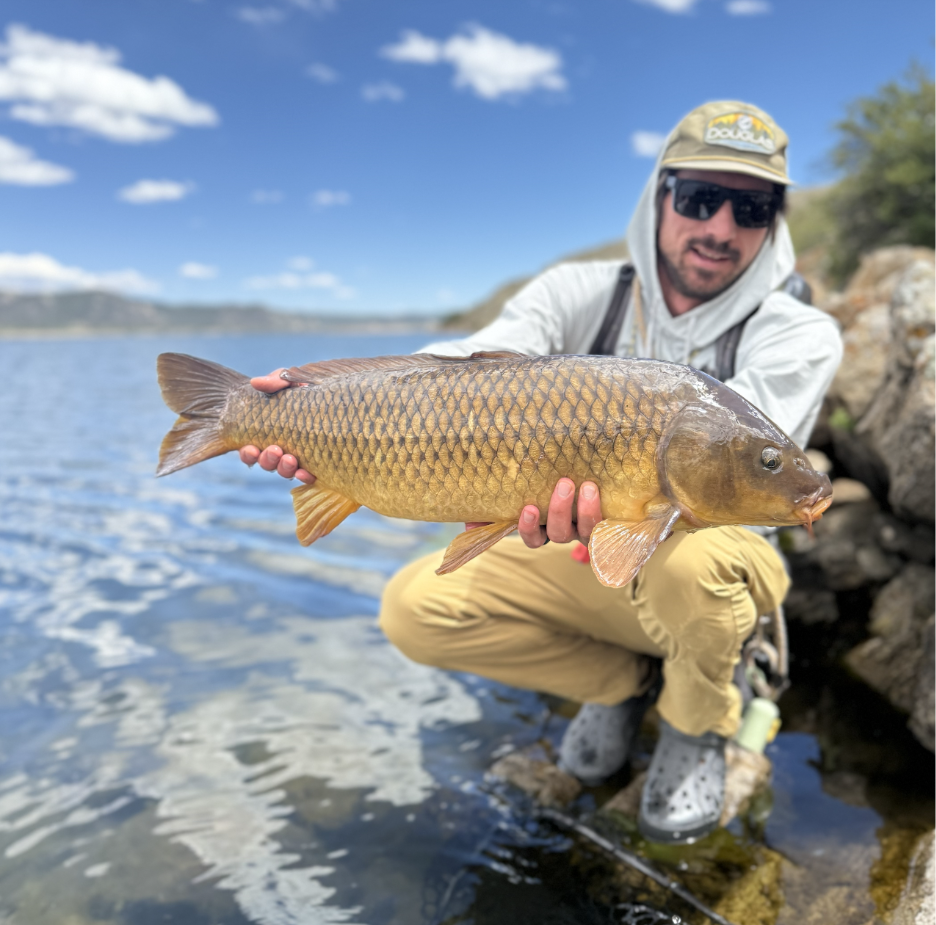
Tanner Barbeau has been fly fishing for more than two decades. After spending his first 15 years almost exclusively targeting trout, a saltwater fly fishing trip changed the way he approached the sport. The hunt, the sight-fishing, and the importance of making the perfect presentation completely changed his perspective. That experience eventually led him to carp.
For Tanner, carp are the closest thing you can get to saltwater fly fishing without actually heading to the ocean. You have to find the fish, read its behavior, and make a presentation before it knows you’re there. And once you hook one, the fight is tough to match.
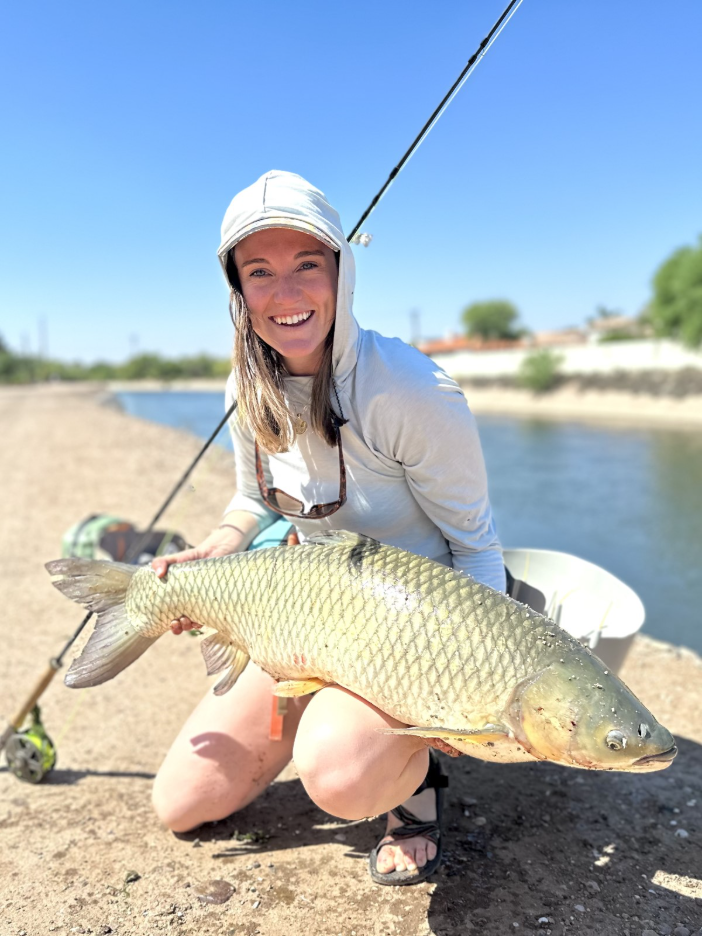
Melissa Ceren, based in Colorado, loves targeting different species and was introduced to carp fishing by her friend Alex in Arizona. She readily admits she’s still a novice when it comes to carp, which might actually make her perspective even more relatable for anyone just getting started.
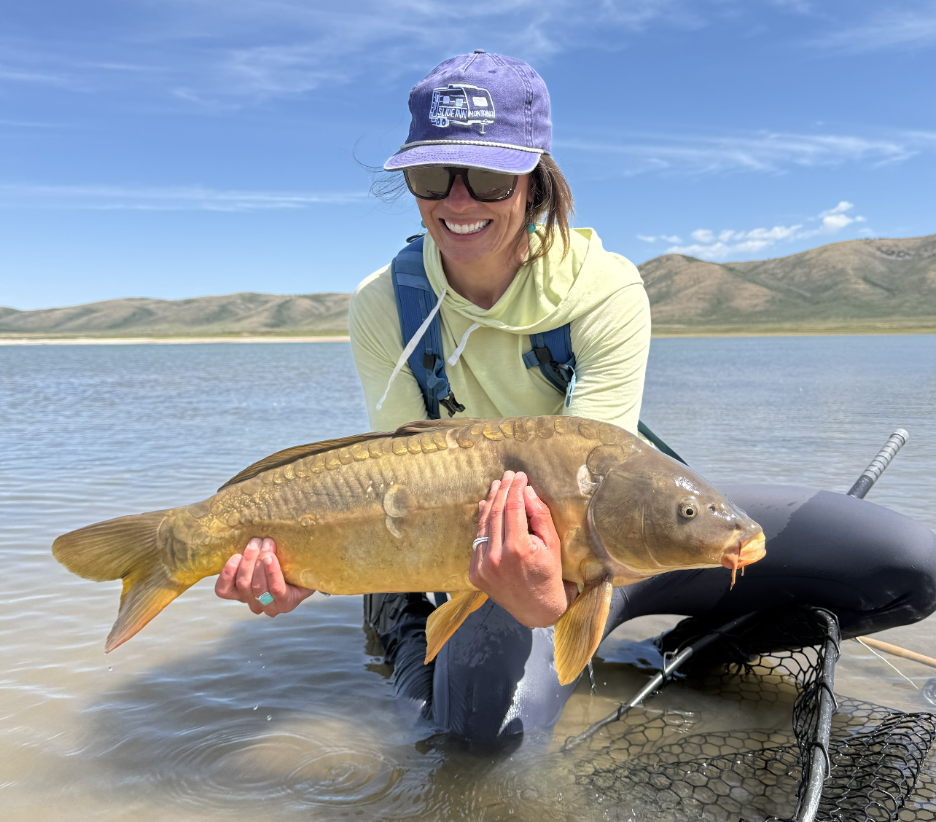
Morgan Barbeau, also based in Colorado, is relatively new to carp fishing but has quickly become hooked. She describes carp as fish that will frustrate you, humble you, and test your patience in ways few other species can. Somehow, that’s part of what keeps bringing her back.
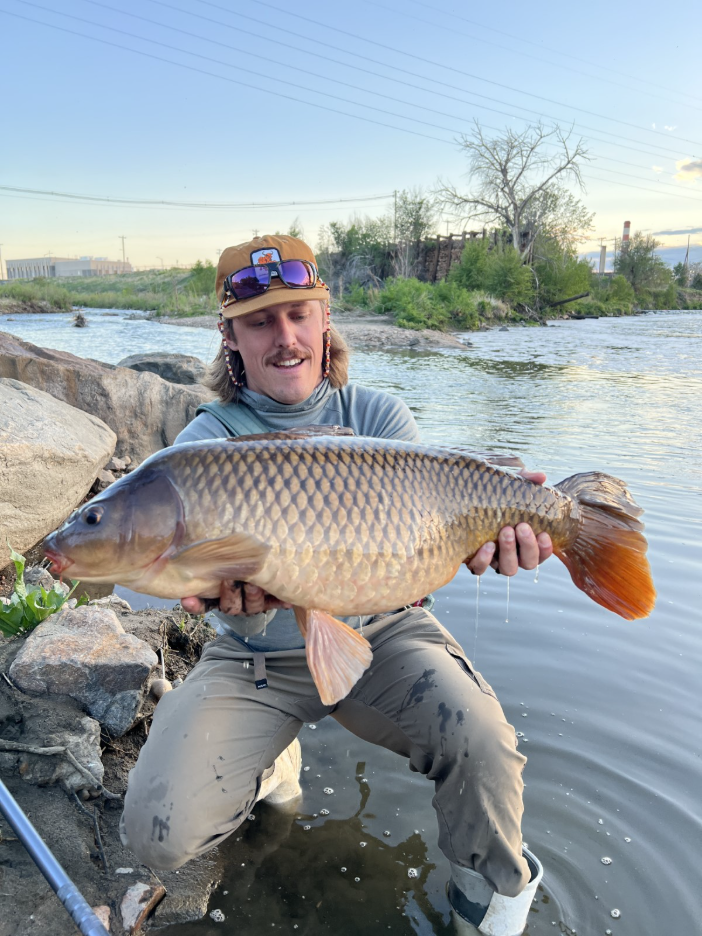
Max Beauchene has been fly fishing and tying in Colorado for about six years and is in his third season of carp fishing. After watching a coworker catch a carp on the fly, he decided to give it a shot. Even after a few solid skunks, he was officially hooked. For Max, the visual nature, size, and intelligence of carp are exactly what make them so appealing.
Why Carp?
If you’ve never targeted carp on a fly, it might be difficult to understand the obsession. While they don’t always take you to the most postcard-worthy bodies of water (although sometimes they might!), chances are they’re thriving somewhere right in your own backyard. Regardless of where you find them, the challenge remains the same: you have to fool them.
That’s what initially drew Tanner to carp. “To me, carp fishing is the closest thing you can get to saltwater fly fishing without actually going to the ocean.” That comparison came up in a different way throughout our conversations. Carp fishing is visual. You’re looking for the fish, watching how they move , and deciding whether or not you should even make the cast.
Max says that’s a huge part of the appeal. Carp are perceptive, their senses are sharp, and everything about catching them is difficult, which is exactly why they’re his favorite fish to chase.
Morgan summed up the addiction pretty well: carp will frustrate you and humble you, but somewhere in that process, they make you a better angler.
Know Your Carp
The pros we talked to primarily target common carp, although mirrors and grass carp also make appearances. Tanner spends most of his time targeting common carp simply because they’re readily available, but mirror carp have earned a special place on his list. Every mirror has its own unique scale pattern, making each fish feel completely different.
Melissa regularly targets common, grass, and mirror carp, particularly in Arizona, while her Colorado fishing is more focused on commons. Her experience also highlights just how different carp fishing can be depending on where you fish. In Arizona, she and her husband Peter spent an entire day chasing giant grass carp in canals in 100-degree heat. They caught roughly seven fish each, and Melissa nearly passed out from heat exhaustion in the process.
Max has caught mostly common carp, along with some mirrors and his first grass carp this year.
The takeaway? Don’t assume carp fishing looks the same everywhere. The species, water, food sources, fishing pressure, and behavior can all change the game.
The First Rule of Carp Fishing: Don’t Spook Them
If there is one subject our pros kept circling back to, it was presentation. Carp are spooky. Really spooky. A perfect fly isn’t going to help if the fish sees you, hears you, or feels your fly smack it on the head.
Melissa recommends learning the drag-and-drop technique for fly placement. Tanner emphasizes long leaders when dealing with particularly spooky fish. Morgan has found that a softer presentation with a 6-weight has resulted in more eats.
And Max’s advice might be the simplest: Move slower. “You can’t be stealthy enough,” he says. It’s a good rule to remember. When you’re approaching carp, every movement matters. Slow down. Watch the fish. Don’t rush the cast. And sometimes, the best cast is the one you decide not to make.
Choosing the Right Rod
There isn’t one universal carp setup. Our pros fish everything from 6-weights to 8-weights depending on the situation, which makes sense when you consider the variety of water and fish they encounter.
Tanner typically fishes a 9’7wt Douglas Sky G, but will reach for a 6-wt when he needs to be stealthier, is making shorter casts, or is throwing dry flies. He pairs it with a floating line, a long leader, and 8- to 12-lb fluorocarbon.
Melissa prefers a Sky G 8-wt particularly when targeting large grass carp in Arizona canals.
Max also fishes a 9ft 7wt Sky G, which he describes as light and soft enough for accurate close-range casts while still having the speed needed for longer, flats-style casts.
Morgan, however, recently made the switch to the Sky G 6wt after seeing how much it improved her presentation. She wasn’t initially convinced that a 6wt would have enough backbone for larger carp, but those concerns disappeared quickly. The tradeoff? Better presentation and more eats.
The lesson isn’t that one rod is better than another. It’s that your setup should match the situation. Bigger fish, wind, longer casts, spooky fish, small flies, and close-range presentations can all change what makes the most sense.
Don’t Overthink the Fly
The fly lists from our pros were surprisingly diverse, but there was plenty of overlap. Mop flies, leeches, damsels, Wooly Buggers, crawfish, eggs, worms, and other buggy patterns all made appearances.
Tanner keeps a chartreuse mop, leech or damsel imitation, crawfish pattern, egg or worm, and even dry flies in the rotation. But he makes an important point: the exact pattern may not be nearly as important as the weight of the fly and the strength of the hook.
A fly that’s too heavy can spook a carp when it hits the water. Too light, and it may never reach the strike zone. And don’t forget the hook. Carp are big, powerful fish capable of making strong runs well into your backing. The fly needs to land softly, get where it needs to be, and hold together when the fish decides it’s time to bolt.
Max’s fly box includes leeches, Headstands, Barry’s carp flies, Wooly Buggers, and chartreuse eggs. His vote for the most versatile option? The Wooly Bugger, thanks to the endless variations in weight, size, and pattern.
Sometimes the Fish Are Smarter Than You
The thing about carp fishing is that failure is often guaranteed. Morgan learned that lesson early. On a trip to Utah, she and Tanner spent more than 12 hours fishing. She watched Tanner catch fish while she struggled to even get into the game. She lost flies, caught weeds, tangled up, and eventually hooked a massive mirror, only to lose it right at the net.
At the very last pond of the day, they found a group of small carp. Morgan finally landed one. It was about 10 inches long. And she was thrilled. After an entire day of frustration, that tiny carp felt like one of the most important fish she’d ever caught. It’s a perfect example of why carp fishing can be so addictive. The goal isn’t always the biggest fish. Sometimes it’s simply figuring something out that you couldn’t figure out yesterday.
The Stories That Keep You Coming Back
Of course, eventually things do come together. For Tanner, one of those moments happened while fishing a beautiful body of water where carp were tailing through weed beds at sunset. There was barely enough light left for sight fishing, but everything lined up: beautiful surroundings, a perfect evening, and a personal-best mirror carp.
Max had a similar experience on a new body of water with his friend Blake. They were fishing from paddleboards, had perfect conditions, and spent the day catching mirrors, big fish, and plenty of memorable carp.
And then there’s Melissa, who spent a full day in the Arizona heat chasing giant grass carp with her husband and friend. Different fish. Different water. Completely different experiences. But that’s part of the appeal.
The Best Advice? Be Patient.
If our pros could give a new carp angler one piece of advice, it wouldn’t be a specific fly or rod. It would be patience. Tanner recommends slowing down and not getting frustrated when things don’t work the first time. He believes learning to catch carp improves almost every other part of your angling—from spotting fish and reading behavior to making accurate presentations and knowing when to cast and when to wait.
Morgan agrees. She says going into a carp session expecting to land a fish is almost a guaranteed way to ruin your own day. Instead, learn to enjoy the process. And maybe she’s onto something. Because the moment you stop obsessing over catching the fish may be the moment everything finally comes together.
Why Carp?
Carp fishing isn’t always easy. That’s the point. They force you to slow down. They make you pay attention. They punish sloppy casts, bad presentations, and careless movement. They’ll eat your perfectly presented fly… or completely ignore it while you stand there questioning every decision you’ve ever made.
But when you finally make the right cast, put the fly in the right place, watch the fish eat, and come tight with a powerful carp, all of those missed opportunities suddenly feel worth it. Maybe that’s why a fish once dismissed by so many anglers has become such a favorite among fly fishermen.
As Tanner put it, learning to catch carp can improve your angling in almost every other aspect of the sport. And once you catch one, there’s a pretty good chance you’ll want to do it all over again.