Meet the Author
I’m Lawrence Stuemke, a licensed outfitter and guide and the owner of Bridger Outdoor Sports in Bozeman, Montana. About 90% of my fly fishing is with a two-handed rod. I enjoy fishing on my feet, wading, and slowing the pace into a methodical but creative rhythm. Spey fishing is not about numbers; it is about quality. The sudden tug of a big trout is addictive. If you have been using traditional fly rods and are open to learning new angling styles and techniques, I highly recommend giving trout spey a try. It will give you a new perspective on your local river.
I bought my first trout spey rod in 1996. Since then, I have chased steelhead, salmon, and taimen, but targeting big browns is just as exciting to me as pursuing any other fish. Most of my guiding experience has been in the western U.S. and Mongolia, and I now primarily teach spey casting and guide trout spey.
What Is Trout Spey?
In simple terms, trout spey means using a two-handed rod to swing flies downstream. It is especially effective for larger predatory trout. A trout spey setup lets you cover much more water with less effort than a single-handed rod. High bank or trees behind you? No problem, you can still make that 60’ cast because spey casting does not require a back cast! You can also fish in windy conditions that would send you packing with a single hand 6 wt. The bottom line is that it’s a very fun way to fish but be warned, it is addictive!
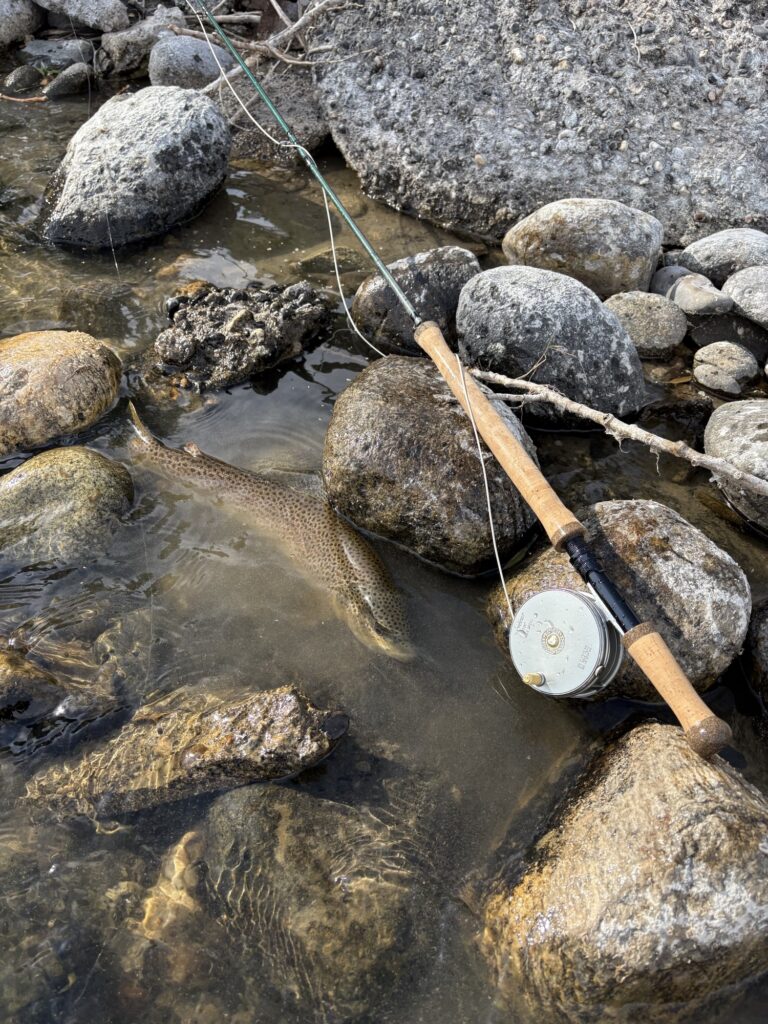
Trout spey can be done on almost any river with longer glides and runs, it is not just for big rivers. The Douglas 11’ 2 wt. DXF Gen 2 is an excellent soft-hackle and small-streamer rod that excels on smaller streams. The most important part of spey casting is having a well matched rod and line, either Scandi or Skagit.
Douglas DXF Gen 2 Trout Spey Rods
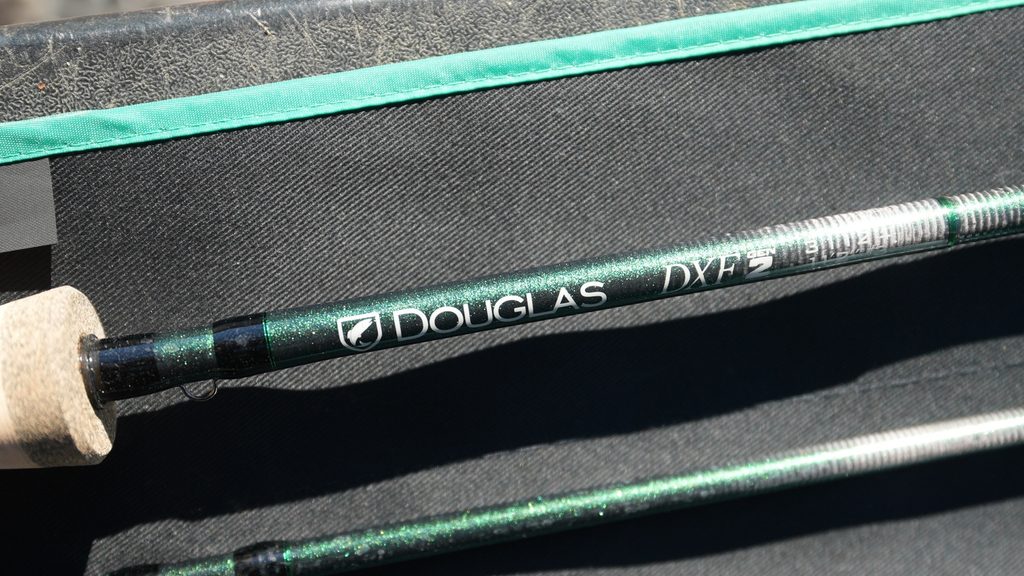
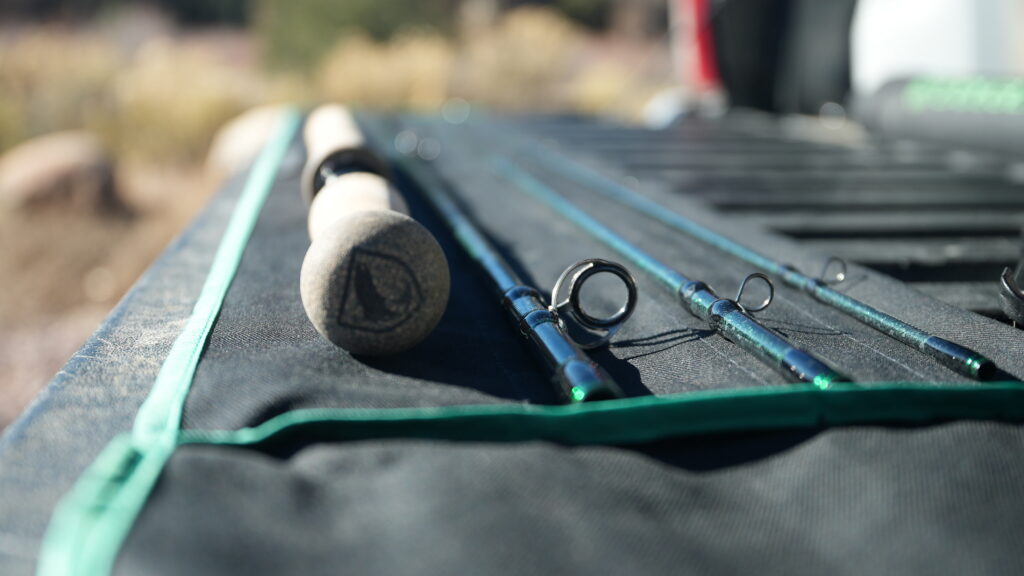
The DXF Gen 2 Trout Spey series caught me by surprise. Douglas is well known for its highly praised and award-winning SKY G Series, and it delivers again with DXF Gen 2 trout Spey rods. They are light in the hand and highly sensitive, giving casters clear feedback, which helps shorten the learning curve for anglers new to Spey casting and makes well-seasoned spey casters smile. The medium action balances power and sensitivity perfectly, they are all capable of punching through the wind on the Yellowstone! The blanks are a rich dark green with black wraps, alignment dots, a high-quality key-loc aluminum down locking reel seat, perfect size cork handles (11” front and 4” rear) with burl rings at both ends, charcoal chromed snake guides, and even a hook keep. The action is consistent in all three of these rods which is always good, if you like one, you will like the other. One thing that stood out to me about these rods is that they like lines at the lighter end of the grain window for their given size. The 2 wt. cast the exact same lines as my Sage HD 1 wt. They cast both Scandi and Skagit heads extremely well but I would give the slight edge to Scandi lines with a bit more lower hand action. This summer I almost got spooled by a carp in the upper teens with the 4 wt. I applied as much pressure as I dared and slowly coaxed the fish in, that’s durability in my book!
2 wt. 11’
Recommended lines: Scandi: 180 gr. +/- Skagit: 210–240 gr. +/-
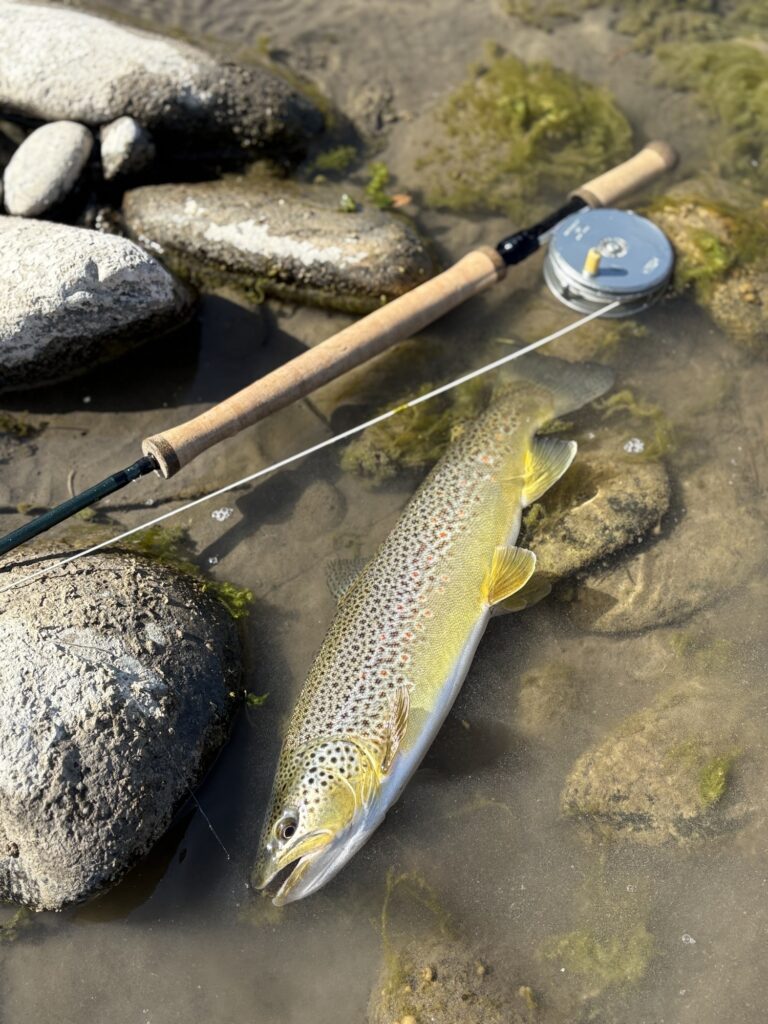
After fishing the Douglas Outdoors DXF 2 11’ 2 wt. for a season, I can confidently say it is a standout on the lighter end of trout spey rods. Lined with a Scientific Anglers 180 gr. Scandi Light head and 7’ SA Sonar leaders, it makes an excellent ultralight trout spey setup. If you like fishing soft hackles and micro streamers, this rod is highly worth considering. I was amazed by how much authority it has for its size. My favorite is a floating poly leader (7’ – 10’), 3 – 5’ of 3X tippet to a #12 partridge and orange and another 2’ of 3X to a # 14 hare’s ear soft hackle. If I want to go deeper, I add a 7’ SA Sonar sink tip with 2’ of 8 to 12 pound test and your favorite smaller streamer (size 6 to 10) and prepare for some fun! The 2 wt. is light in the hand, responsive, extremely smooth casting, and enjoyable to fish. I would consider it a true 2 wt. spey rod with a grain window that hovers around 200 grains, plus or minus. This is THE best soft hackle rod I have ever used!
3 wt. 11’ 2”
Recommended lines: Scandi: 210 gr. +/- Skagit: 240–270 gr. +/-
The 3 wt. is what I consider the most versatile trout spey weight. It is delicate enough for soft hackles and smaller flies, but it also carries the extra power needed for modest streamers, sink tips, and a wider range of water. For anglers who want one trout spey rod that can handle most conditions, the 3 wt. is the natural starting point. For longer casts, a 210 Scandi line is right on & powers through wind with ease. I also use 7’ SA sonar tips for Scandi heads on this rod, 6-7 IPS tips no problem. It casts 240 or 270 gr. Heads very well and turns over 10’ of T-8 easily.
4 wt. 11’ 4”
Recommended lines: Scandi: 240 gr. +/- Skagit: 270–300 gr. +/-
This is the heaviest of the rod series and is suitable for bigger water with larger trout. Replicating it’s smaller siblings, it is smooth and powerful. I found it to be a bit more flexible as far as line compatibility. For the 2 and 3 weights, the scandi weight had to be right on (180 and 210 gr. Respectively) but the 4 wt. cast well with both a 240 and 270 scandi head. The 240 gr head rockets through the wind with lighter tip and fly combinations. If I were going to fish with heavier sink tips (4 IPS +) or in windy conditions, I would consider using the 270. If conditions require getting deep with larger flies, It cast 270 or 300 skagit lines and 10’ of T 8 or T10 easily.
Taken together, the DXF Gen 2 Trout Spey rods offer a well-balanced range for anglers who want efficient casting, strong feel, and dependable performance across different trout water. The 2 wt. shines for lighter presentations, the 3 wt. is the most versatile all-around option, and the 4 wt. is the better choice when conditions call for more authority.