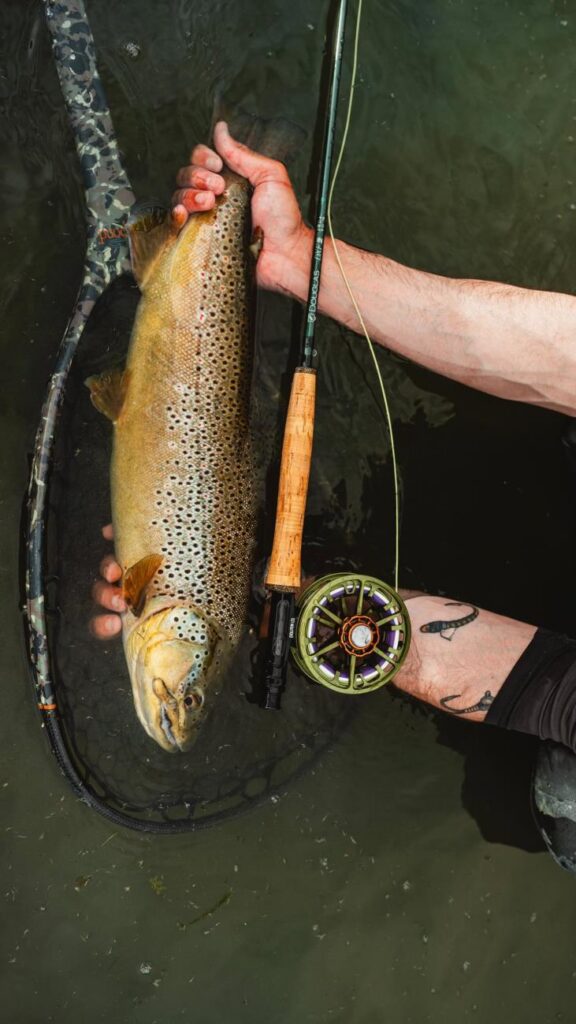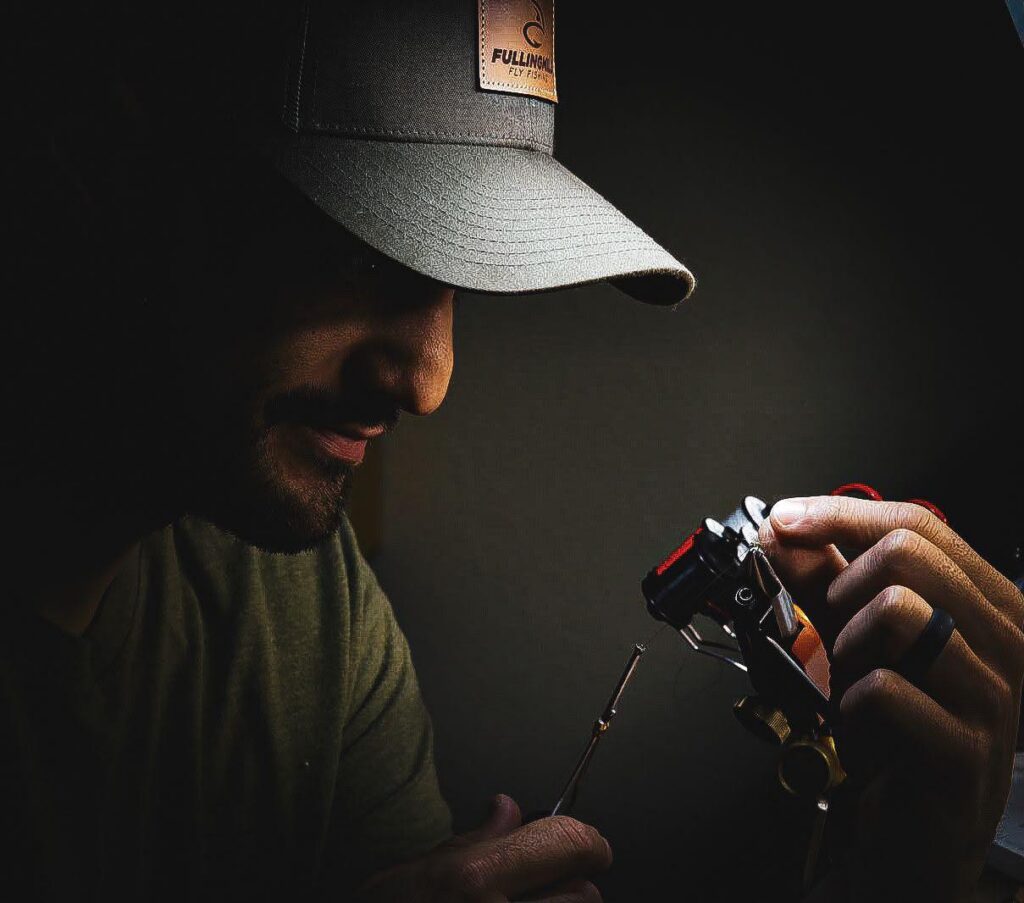
Tyler Boroff is a full time fly designer, fly fisherman, father, and guide. He tied his first fly at the age of 3. From there on he realized fly fishing would change his life and become a huge priority for him. He decided to concentrate on fly tying and perfecting his craft. Tyler had the opportunity to travel to several different rivers, lakes, and streams all over the world allowing him to benefit from his fathers military career. By sharing his passion Tyler hopes to instill the genuine love for the water and the beautiful creatures that live within.
Why Fall Is One of the Best Times to Fish for Trout
Fall has to be my favorite time of year to fish. As the days get shorter and the water and air temperatures cool down, trout begin to change their feeding behaviors. In the summer, trout feed for longer periods of time several times throughout the day. In the fall, they narrow their feeding windows, and their eating habits can become more predictable.
Trout are known to feed during the warmer parts of the day, taking advantage of insects as they move through the water.
Before actually choosing my flies, there are a few things I look for. When I first arrive at the river, I spend some time looking around. I pay attention to bird activity. For example, when birds are seen swooping down to the water, this can indicate that they are taking advantage of a hatch.
Another thing I focus on is the bugs themselves. What different varieties are hatching on the surface? Keeping my eyes on the water helps me spot even the slightest movement of fish rising.
Once in the water, I pick up rocks, moss, sticks, and any debris I can find. All of these preliminary steps help me determine which flies and rigs I’m going to start with.
Blue-Winged Olives (BWOs)
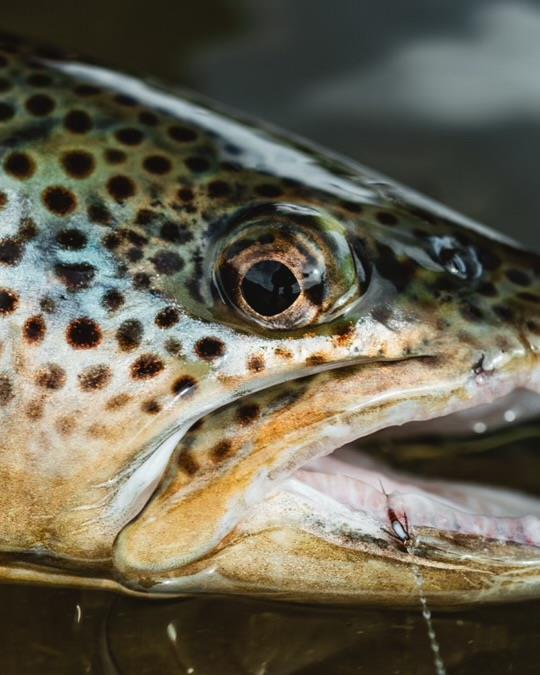
Fall can produce some of the best BWO fishing conditions of the year. There are sunny, cold days when you can focus on Baetis nymphs and Baetis emergers. However, when fishing BWOs, you want to keep an eye out for cool, cloudy days. BWOs love gray, cloudy weather and tend to hatch for longer periods throughout the day.
I try to take advantage of these conditions with the dry fly eaters. My preferred fly in this situation is the CDC Loop Emerger.
When rigging for this, I use a 9-foot tapered 4X leader. I also like to add 2½ feet of 5X tippet to help the fly land softly, giving you a stealthy advantage and helping prevent the fly line from spooking fish.
Fishing conditions can change hourly, so I always like to carry a lightly weighted nymph rig as well. Two flies I make sure to always have with me are the Crave Baetis and the Space Cadet Mayfly Emerger.
For this, I choose a rig we call the Finesse Rig. This rig consists of 3 feet of 12-pound Maxima with a non-slip loop on one side. To the other side of the Maxima, I add a small micro swivel before attaching a tippet ring to the end of the 10-pound fluorocarbon line. I then slide on a medium or small white Ninja Indicator.
This rig allows me to fish my flies in different water columns while utilizing a more level leader.
October Caddis
Fall can bring some warmer, sunny days that produce October Caddis. When I say caddis, I’m focusing more on the larvae. While there are some days when the adult is a no-brainer, I find the larvae to be successful nearly every day.
October Caddis larvae seem to be larger than their summer counterparts, making them a primary food source for large trout.
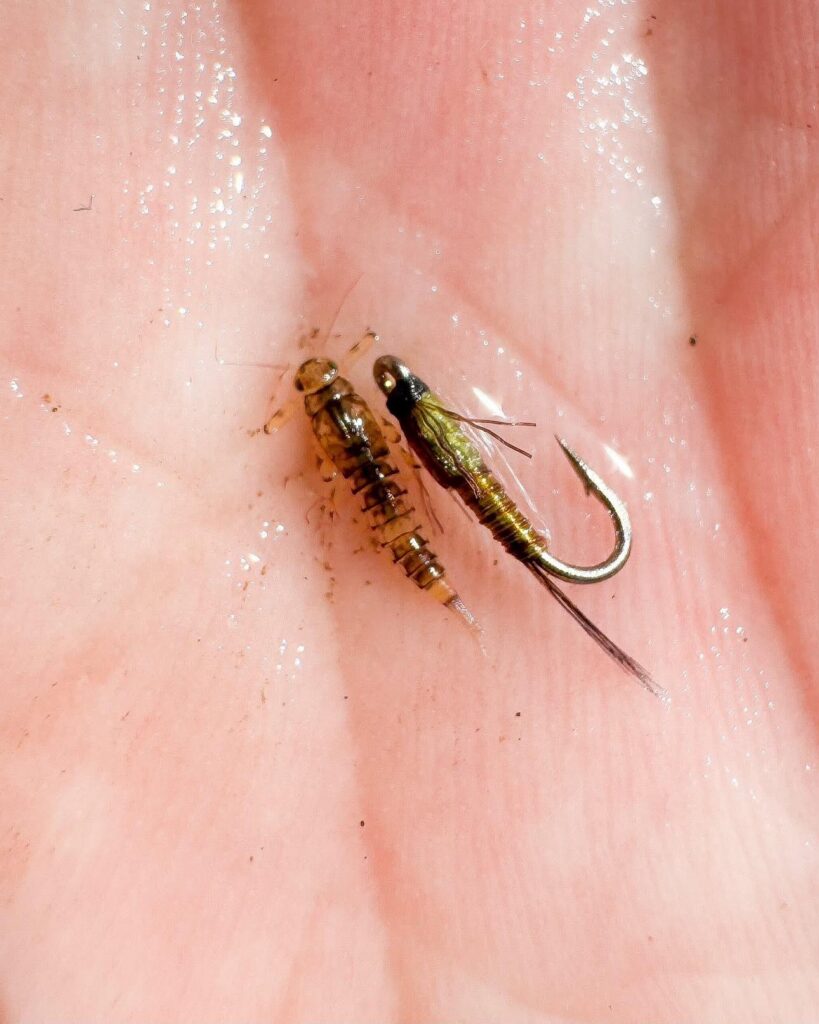
To match the hatch, I look for moss and grass clumps, sticks, and logs, along with flipping over a few rocks. After collecting a few insects, I try to match their color and size as closely as possible.
My favorite fly for matching these larvae has to be the Knuckle Breaker Caddis in sizes 14–16. With water levels typically being lower, I fish these flies on a Finesse Rig and utilize the bead on the fly as my primary weight.
Midges
My preferred part of fall has to be the midges. When the weather gets colder, it doesn’t necessarily mean midges disappear. It’s quite the opposite. This is when midges become one of the most important food sources for trout.
Nearly every other insect in the river decreases rapidly as winter sets in, while midges continue to thrive. Throughout the winter, midges don’t require an extensive amount of time to hatch. This allows us to experience several mini hatches.
Along with that, many midge larvae and pupae remain in the rivers. Trout key in on these midges, following them throughout their life cycle, from the larval stage on the bottom of the river to the pupal and emerger stages in the middle and upper water columns.
I use a different fishing technique by utilizing small hooks, ranging from size 20 all the way down to size 28, with my Finesse Leader.
Finesse leaders are beneficial to my fishing style because they are less likely to spook fish in thin, clear water. Using small hooks means using small tippet as well. The thicker the tippet, the stiffer it is, which can greatly affect the presentation of your flies.
Choosing 5X down to 7X tippet allows for a more natural presentation.
The Waader Midge and Foamie Homie in sizes 22–26 are my most trusted flies throughout most of the fall and winter seasons.
Terrestrials: Ants, Beetles, and Hoppers
Although they aren’t always visible, terrestrials such as ants, beetles, and grasshoppers can still be found in the water.
Using a dry-dropper rig can help prevent fish from spooking due to the splash of an indicator. I also use a small hopper with a Perdigon dropper while targeting deeper runs, undercut banks, structure, and fast riffles.
If I see consistent frost or ice along the banks of the river, I’ll make sure to carry some sort of terrestrial fly.
Streamer Fishing for Big Fall Brown Trout
When I think of the fall season, I immediately picture big, mean brown trout. Fall is when brown trout begin their spawning journey. Leading up to the spawn, these trout are feeding aggressively and putting on weight. The big males get aggressive, chasing down smaller fish and even each other.
Throwing streamers can be a great approach.
Cloudy days are some of my most treasured days on the water. I’ve noticed that throwing a streamer or Woolly Bugger causes more fish to follow my flies on dark, gray, cloudy days.
When fishing streamers, I prefer to target deep pools, current seams, undercut banks, and any kind of structure.
The fish’s attitude seems to change daily, so finding the proper retrieve for the situation is key. I have a particular order I run through in every hole:
- Dead drift.
- Swing the fly across the current.
- Slow retrieve without pausing.
- Sporadic fast retrieve with minimal pauses.
- Strip and pause at different speeds.
After going through the different retrieves, I develop one that matches the reactions I’m seeing from the fish.
When fishing streamers, I prefer a fast-action 6–7 weight rod. Over the years, I’ve come to gravitate toward the 9-foot SKY and SKY G rods.
Fall and Winter Nymph Fishing
Most of the fall and winter, I find myself nymphing. I’m targeting mayflies, Baetis nymphs, stoneflies, caddis larvae and pupae, midges, and things like eggs, worms, and leeches.
Not every day you get to the river will produce insects hatching. These are the days I remind myself that trout do most of their feeding beneath the surface of the water.
When nymphing, I use a 12-foot Finesse Leader with minimal weight. I prefer a Ninja Stop Shot weight with a rubber insert so I can move my weight around.
It’s important when nymphing to cover depth before ever changing flies. I’ll fish anywhere from 3 inches under the surface to dragging bottom before deciding to change my flies.
Getting great dead drifts and making sure the fish are seeing your flies should always be the main focus.
The Fall Fly Box
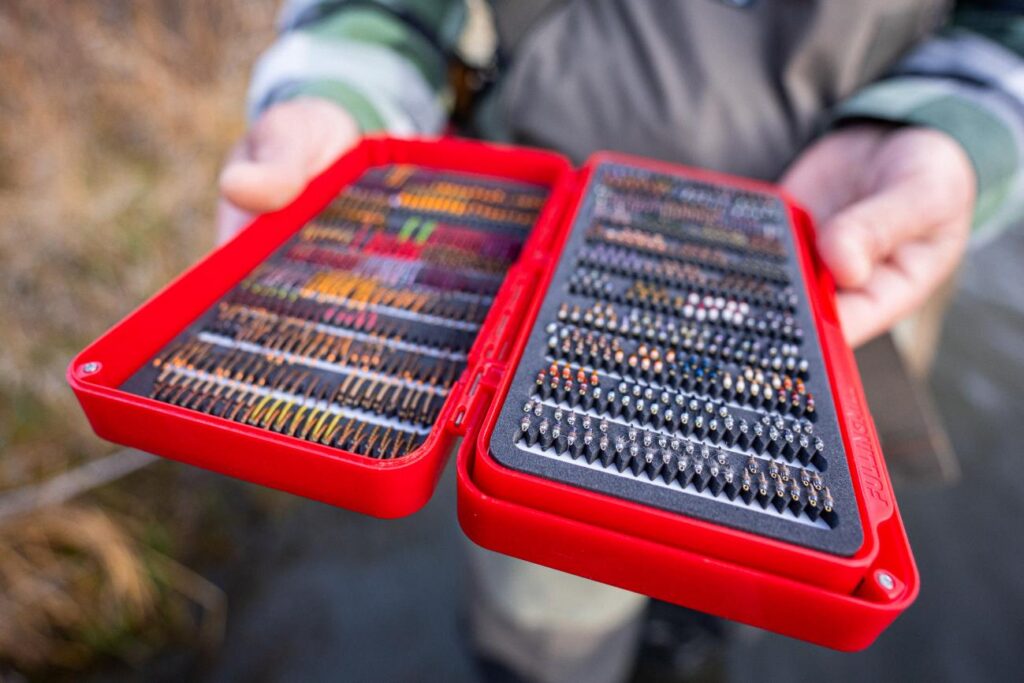
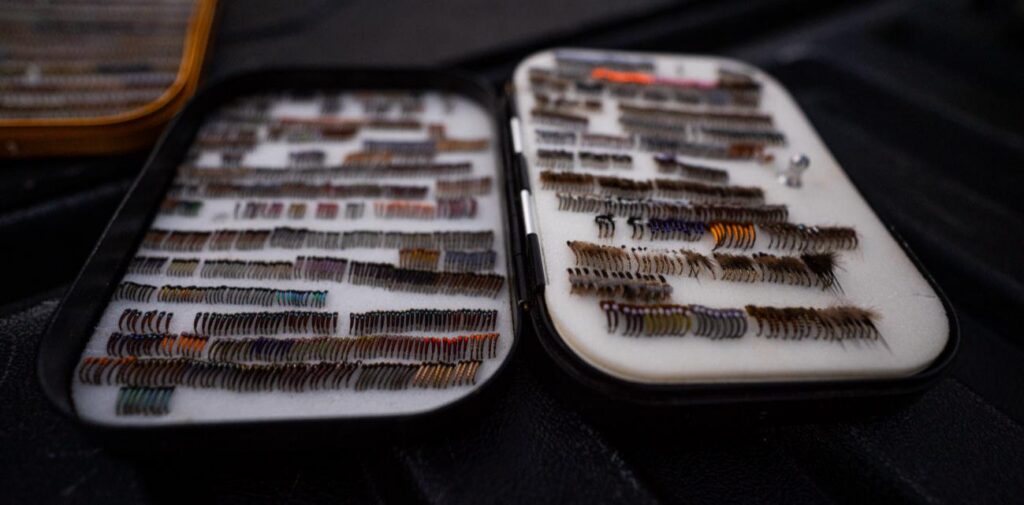
Here are the flies I make sure to have in my box throughout the fall season:
- Anne Worm – Red, Sunburst | Sizes 14–20
- O.G. Midge – Brown, Black, Tan, Gray | Sizes 22–26
- Foamie Homie – Brown, Black, Tan, Gray | Sizes 22–26
- Waader Midge – Brown, Black, Tan, Gray | Sizes 22–26
- The Bank Robber – Gray, Olive, Tan | Size 2
- Cone Head Woolly Bugger – Black, Olive, White | Sizes 6–10
- Knuckle Breaker Caddis – Tan, Brown, Olive, Chartreuse | Sizes 14–18
- The Space Cadet Mayfly – Brown, Black, Tan | Sizes 18–22
- The Crave Baetis – Olive, Tan, Brown | Sizes 16–20
- CDC Loop Wing Quill Emerger | Sizes 18–20
- Flash Back Pheasant Tail | Sizes 14–22
- Tactical BWO | Sizes 16–20
Fall Trout Fishing Gear and Setups
When gearing up for fall fishing, I prefer a 10-foot 4-weight SKY G for my dry fly and nymphing rigs. For streamers and heavier nymphing, I go with a 9-foot 6-weight SKY G rod.
My fly line of choice is the Scientific Anglers Amplitude Smooth Glow Tip for its floating ability. The Glow Tip line is white at the tip, helping with stealth while also providing visibility in low-light conditions.
Nymphing Setup
When nymphing, I prefer the Finesse Rig. This consists of 3 feet of 12-pound Maxima with a non-slip loop on one side. To the other side of the Maxima, I add a small micro swivel before attaching a tippet ring to the end of the 10-pound fluorocarbon line. I then slide on a medium or small white Ninja Indicator.
This rig allows me to fish my flies in different water columns while utilizing a more level leader.
Streamer Setup
For streamers, I take 3–5 feet of 15-pound Maxima connected to a micro swivel. I then attach 5–6 feet of 12-pound fluorocarbon. When attaching my fly, I prefer a small non-slip loop knot.
Dry Fly Setup
Dry fly fishing is pretty basic for me. I use a 9-foot 4X leader and attach 2½–3 feet of 5X monofilament tippet. This gives the fly a longer reach from the thicker line while allowing it to land softly.
I don’t always carry three different rods rigged, but when I’m going to a new place or somewhere I haven’t fished frequently, I will. Otherwise, the water flows and weather determine which two setups I’ll focus on.
On warm, sunny days, I’ll take my nymphing setup and dry fly setup. On cloudy days, I’ll choose my dry fly and streamer setups. If the day produces a mix of weather, I’ll take my nymphing and streamer setups.
Let the River Tell You What to Fish
Fall fly fishing isn’t always the perfect day you see posted online. Fishing can be absolutely amazing at the most random times.
Let the river tell you what to use, not other anglers. Go down to the water and take a minute to look around. Pay attention to the birds, insects flying around, and bugs stuck to the water’s surface. Pick up rocks, moss, sticks, and debris to see what’s moving around.
Don’t forget to add some bigger food options to your box. Streamers, hoppers, caddis, and even mice can be a meal for a big, hungry brown trout.
Let the weather and water flows guide your choice of how to fish. Be sure to take advantage of the warm fall days before the cold winter days set in and the fish calm down.