
Why I Centerpin
I discovered centerpinning shortly after moving to Upstate New York with the military. Before that, I had never seen anything like it. I remember seeing guys on the river using these long rods with reels that looked completely different from anything I had used before. What really caught my attention, though, was that they were consistently catching fish.
I was immediately drawn to it. I wanted to know what they were doing and, more importantly, why it seemed to work so well.
I started talking to people on the river and asking as many questions as I could. I was fortunate enough to meet an angler who took the time to help me out. He set up my spinning rod using a traditional shot pattern and showed me how to approach the drift. That same day, I caught my first steelhead.
Let’s just say I was HOOKED.
After fishing that setup, he told me that I could get an even better drift with a centerpin. I went out and bought one, and that was the beginning of an obsession that has continued to grow ever since.
My first steelhead on a centerpin is a fish and a moment that will be ingrained in me for the rest of my life. It was a nasty February day, which I now know can produce some of the best winter steelhead fishing. I was drifting the tailout of Schoolhouse Hole on the Salmon River when the float disappeared.
When I hooked that fish, it went absolutely ballistic, launching out of the water. After landing it, I knew I wanted to become as good as I possibly could with this technique.
Why Centerpinning?
For me, centerpinning is all about control and presentation.
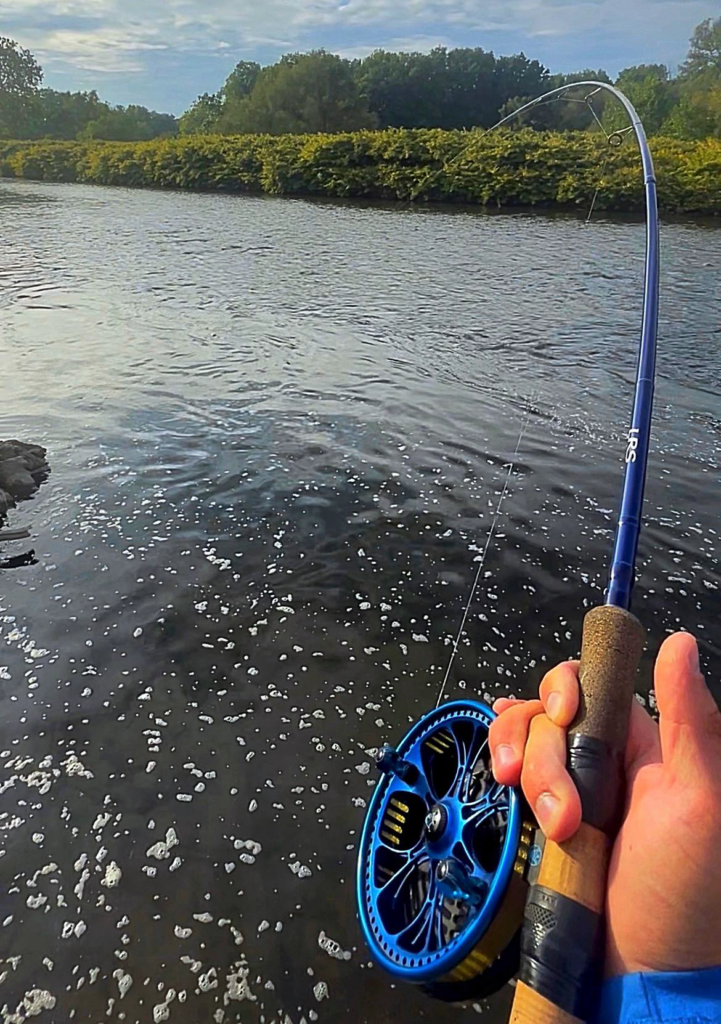
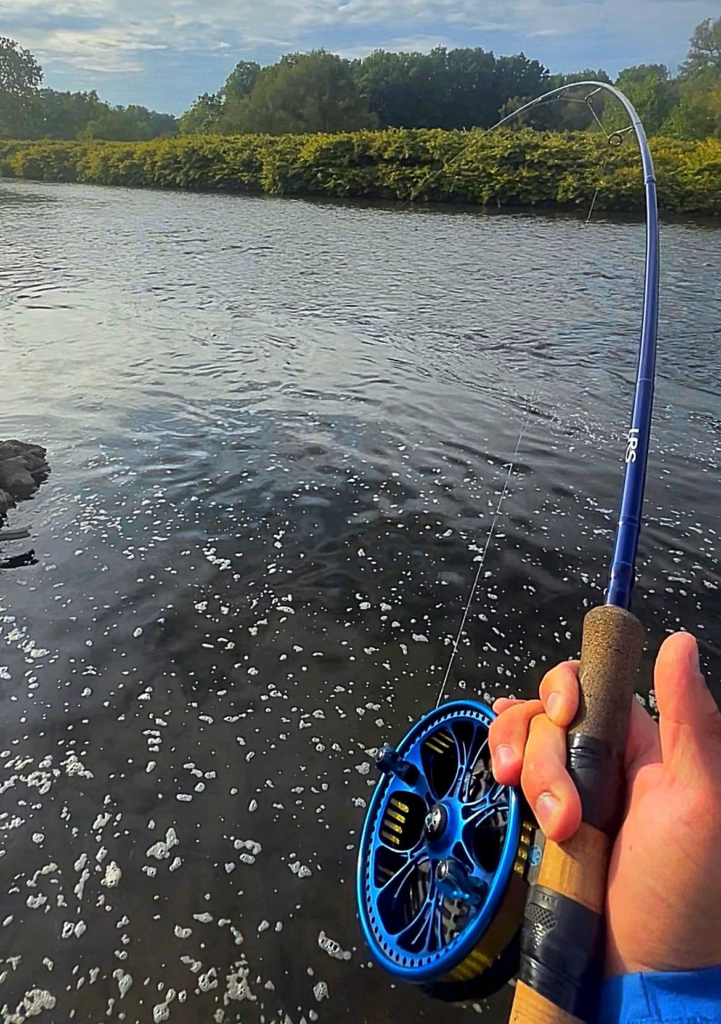
There is something special about being able to make a cast, get the float where you want it, and then allow the rig to travel through the current with very little drag. The long rod, free-spooling reel, and ability to manage line off the water allow you to maintain an incredibly natural drift.
That natural presentation is a huge part of what makes centerpinning so effective.
I also love the level of control it gives you. You can make adjustments throughout the drift, manage your line, control the depth, and keep your presentation in the strike zone for a long time. When everything comes together, you can watch your float travel through a run exactly the way you want it to.
Then there is the bite.
There is nothing quite like watching that float disappear after you’ve worked to put the presentation exactly where you want it. Once that happens, the centerpin comes alive, and you are connected directly to the fish and the current.
Steelhead, Salmon and Beads
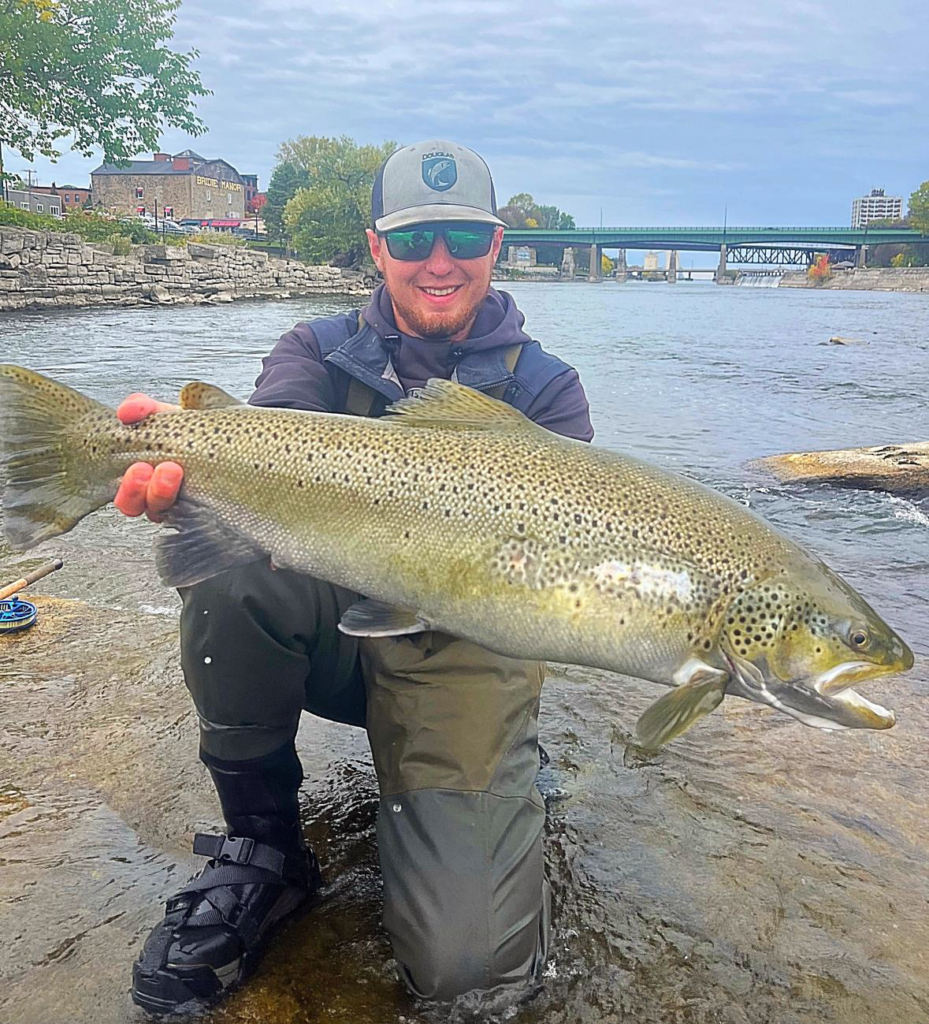
Steelhead and salmon are pretty much the only species I target with a centerpin. Over time, I’ve become especially interested in refining my presentation and figuring out what consistently produces fish.
One of the biggest parts of that for me has been painting my own beads.
Combining centerpinning with the ability to create and customize my own bead patterns has become an extremely effective way for me to target steelhead and salmon. Being able to experiment with colors, sizes, and patterns gives me another way to fine-tune my presentation depending on the conditions and the fish.
There is also something rewarding about catching a fish on a presentation that you created yourself.
Getting Started with Centerpinning
If you’re thinking about getting into centerpinning, my biggest piece of advice is to spend time around people who are already doing it.
That’s how I learned. I asked questions. A lot of questions.
Don’t be afraid to talk to people on the river and learn from them. Centerpinning can look intimidating when you’re first getting started, but the fundamentals aren’t as complicated as they may seem. Understanding your float, shot pattern, depth, and how to control your drift will take you a long way.
The biggest thing is learning how to get a natural drift. Don’t worry about making everything perfect immediately. Spend time on the water and pay attention to what your float and line are doing. You’ll learn something every time you fish.
Don’t get discouraged if the casting or line management doesn’t come naturally at first. It takes practice. Once it starts clicking, you’ll understand why so many people become obsessed with this style of fishing.
Why I Fish Douglas
I primarily fish the Douglas LRS 13’6” Centerpin rod, and it has become a rod that I have a lot of confidence in.
What I really like about it is the combination of backbone and softness. It’s rated for 6–12 lb line, so it has the backbone I want when I’m dealing with big steelhead and salmon, but it also has a softness that’s difficult to appreciate until you’ve actually fished the rod.
That softer action is especially important when I’m fishing light leaders for finicky winter steelhead. You can have a big fish on the end of the line, but you’re still dealing with relatively light leader material. The rod helps protect that leader while still giving me the power I need when a fish decides to take off.
For me, confidence is a huge part of fishing. When I step into a river, I want to know that my equipment is going to do its job when the opportunity I’ve been waiting for finally comes.
The LRS gives me that confidence.
A Fish I’ll Never Forget
My most memorable fish came in the fall of 2025.
I was fishing a fast riffle with some softer water on the outside. I decided to bomb a cast across the river and work the float through that softer water.
Then—BOOM—the float disappeared.
I knew immediately that I was connected to something big.
The fish took off downstream at what felt like 100 miles per hour and disappeared underneath a huge log. It came out the other side, and at that point I knew I had a serious problem.
That’s never something you want to see when you’re attached to a big fish.
I took off across the river and dove underneath the log. I knew there was a chance I had a fish of a lifetime on the other end, and I wasn’t about to give up on it.
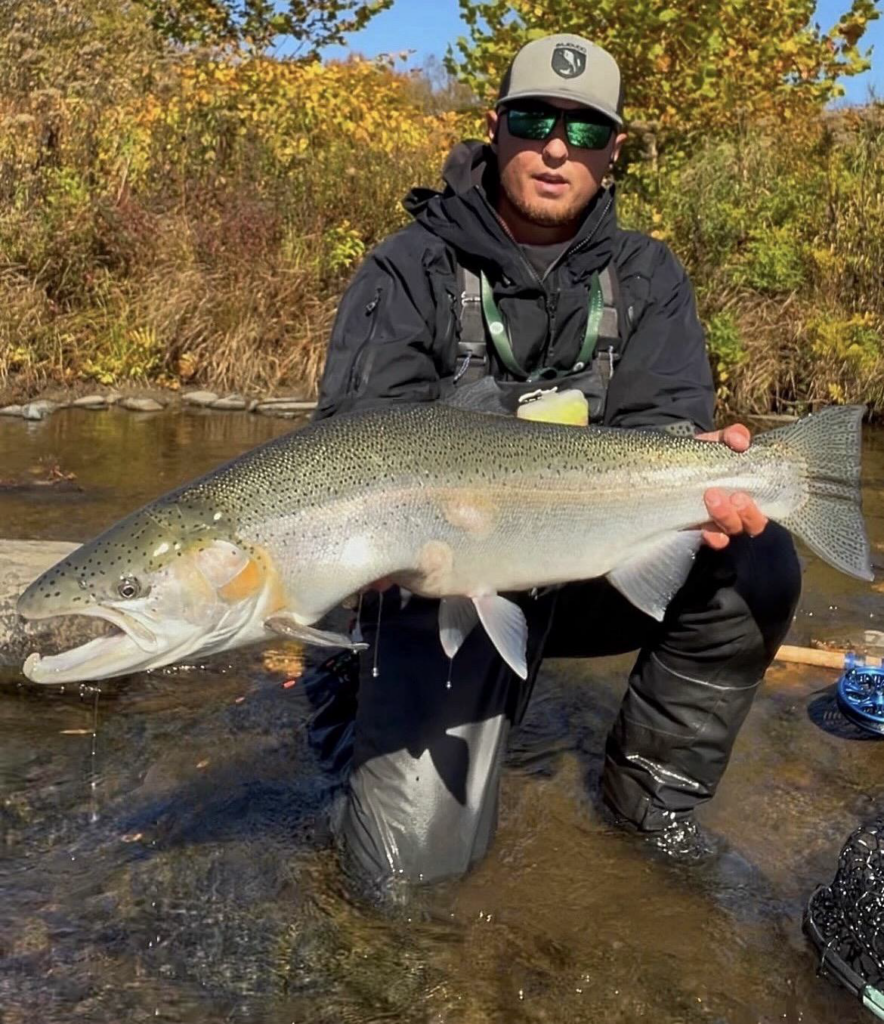
By the time I made it to the other side, I was completely soaked, but somehow, I managed to stay connected and eventually land the fish—a 36.5-inch steelhead, and the biggest male steelhead I had ever seen in person.
That fish is one I’ll never forget.
That’s what centerpinning has become for me. It’s not just a way to catch fish. It’s the challenge of learning the river, perfecting the drift, understanding your presentation, and being prepared for that one moment when everything comes together.
From the first people I saw centerpinning when I moved here, to the anglers who took the time to answer my questions, to that first steelhead in February, the technique has completely changed the way I fish.
I’m still learning every time I step into the river and you should be too.