
Morgan Barbeau, March 2026
For a lot of anglers, fly fishing gear gets packed away for the season once temperatures start dropping below 40. Can’t blame them – cold hands, icy guides, and the extra effort of layering to the point of not being able to put your arms down aren’t exactly selling points. But if you’re reading this, you’re probably curious about what you might be missing out on while everyone else is hibernating.
The truth is, winter fly fishing has some real advantages. Less crowds, no jockeying for position, and trout that still need to eat, sometimes just a little slower and more selectively. They’re holding in predictable spots, and if you know where to look and how to present a fly to them, you can have some surprisingly good days.
That said, winter fly fishing asks more of you. Cold temps aren’t just uncomfortable—they’re a legitimate safety concern if you’re not prepared. Add in tricky wading conditions, frozen guides, and numb fingers, and it’s easy to see why most anglers would rather tie flies in a warm basement.
Proper preparation transforms winter from something you endure to something you can actually enjoy and fish effectively in. This means getting your layering system right, investing in fly fishing gear that performs when it’s cold, and adjusting your tactics to get fish to eat.
This guide covers everything you need: building a layering system, essential fly fishing gear for the winter, and how to adjust your presentation to catch fish. Master the preparation, and there’s a good chance you’ll have an epic day on the water in the dead of winter.
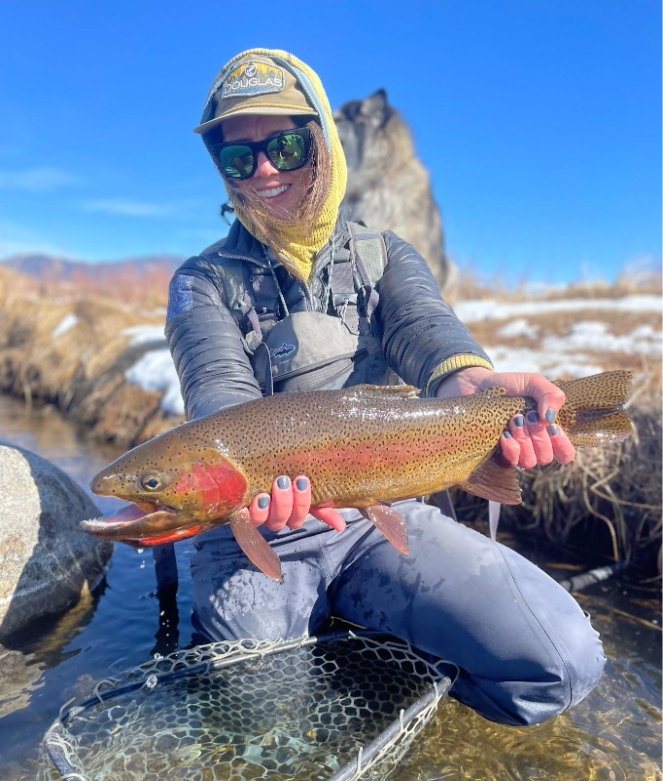 Fly fishing in the winter is a great way to enjoy popular water with less crowds.
Adjusting your Fly Fishing Tactics for Winter
Fish Behavior in the Winter
As you might expect, trout behavior is dramatically different in the cold winter months than they do during warmer seasons. Trout are cold-blooded, which means their body temperature matches the water around them. When the water temperatures drop into the 30s and 40s, their metabolic rate slows significantly.
This doesn’t mean that trout stop eating though–they still need calories to survive winter. But they become much more selective about energy expenditure versus caloric return. In 38℉ water, a fish that would typically chase a giant streamer across the river in warmer temperatures is more likely to wait for food to practically drift into its mouth in order to conserve energy.
Where Fish Are Holding in the Winter
When temps drop, trout often ditch the faster riffles and pocket water they occupied in the summer. They’re looking for water that offers three things: slower current (less energy expenditure), deep holes (thermal stability), and proximity to food lanes.
Deep pools become prime real estate. Trout stack up in the deeper sections where current is minimal and water temperature is the most stable. Soft seams are also productive. Look for transition zones where faster current meets slower water. The fish will tuck into the slow side and pop out into the faster current to intercept food drifting by, then move back.
Lastly, fish tend to pod up together a bit more in the winter since they’re all looking for these prime winter waters. Where there’s one, there’s likely many, so it’s worth spending some time on the deeper holes and seams you find along the stretch of river you’re fishing.
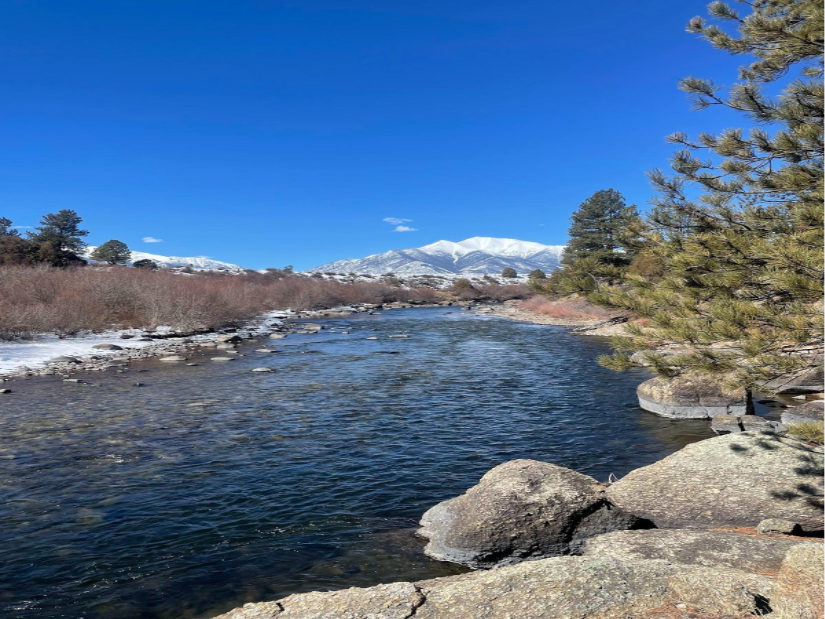 Deep, slow runs are bound to hold fish in the winter.
Winter Fly Fishing Tactics
With slow, clear water, fish in the depths, and minimal hatches happening, winter requires a slightly different approach than what the summer angler might be used to. For starters (and maybe one of the biggest draws to winter fly fishing if you’re not a morning person), you can sleep in! Overnight freezes can drop temps and shut fish down completely by morning, but if you give the sun some time to work its magic, you can get a great midday or afternoon feeding window, and maybe even a midge or baetis hatch if you’re lucky.
In my experience, some of my most productive winter days were achieved while nymphing. That’s not to say if you should skip an opportunity to throw dries at rising fish, or run a streamer through a hole if the weather is a little warmer. But if you’re not seeing surface activity and the daytime temps stay mild, nymphing allows you to get your flies down deep where the fish are stacked, and dead drift right to them.
When I’m rigging to nymph, I like to try and find the bottom of the run, and then work my way shallower. That way I know I’m getting down deep enough to where the fish should be. I typically will tie on a heavier perdigon (I love the Spanish Bullet), jigged leech, or even a mop fly (call the cops!) as my bottom fly, and then something smaller, like a classic zebra midge or juju baetis about 12-18” above my bottom fly.
Tippet size will depend on the water you’re fishing. Use the largest size tippet you can get away with. While stealthiness is important in the winter, and thinner diameter tippets do sink faster, it’s a good best practice to shorten the fight with the fish and avoid exhausting them. Generally speaking, I fish anywhere between 4-6x fluorocarbon when nymphing in the winter. 4-5x for tailwaters and rivers, 5-6x for small creeks and extra picky tailwater fish.
Split shot will also be critical to help get your flies down. Consider how fast the water is moving and how long it might take your flies to drop into the strike zone. If it’s a shorter, faster run, you may need more weight to help your flies get down quickly. I like to put my split shot about 12” above my top fly. Again, you may need to add/remove split shot depending on the depth, weight of the flies you’re using, and how fast the water is moving.
Lastly, you’ll need a strike indicator for this rig. I like to use the smallest I can get away with, without it getting pulled down by current or the weight of the rig (and of course, big enough that you can actually see it). You don’t want to be slapping the surface with an oversized indicator. You can slide your indicator up or down your leader to adjust your depth.
This is a very basic nymph rig. There are lots of different ways to set this up. Some people will put a light fly on the bottom and heavier fly above it to hover off the bottom, some folks will tie their flies off a tag end, others even fish three flies at a time. As with anything in fly fishing, mess around and find what works best for you.
One final note on nymphing: with all these different components on your rig, overhand casting it can be a bit cumbersome. I find roll casting this rig to be much easier and leads to less tangles (the last thing you want to deal with when your fingers are near frozen). This cast might take a little time to get used to, but it’s definitely worth learning and can come in handy for situations where you don’t have backcast room.
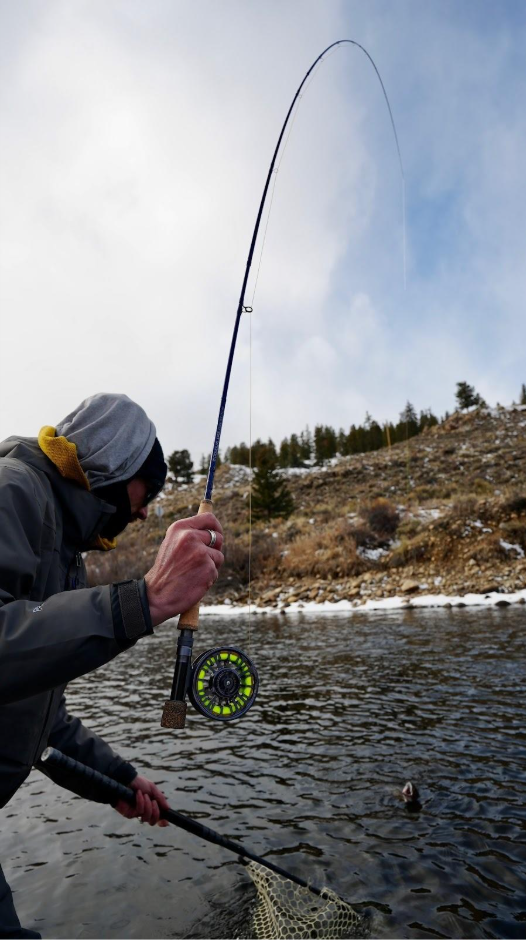 Nymphing is a great tactic in the winter.
Rods for Winter Fly Fishing
You don’t need anything specifically for winter fly fishing when it comes to rods. It really comes down to what you enjoy casting, or what you already have. For most trout applications, a 9ft 5wt rod will work just fine. That said, certain rod characteristics become more noticeable in winter conditions —like how well a rod loads with heavy nymph rigs, or how it casts in heavy wind. Here are a couple rods I have in my quiver that are great for winter (or anytime):
The Douglas LRS 9ft 5wt: I think this is a great all-around trout rod, and it’s excellent for beginners. It’s got medium-fast action, so it’s easy to load and has enough backbone to turn over nymph rigs and small streamers, or delicately present a dry fly. The softer flex also helps protect the lighter tippets. You’d also be hard pressed to find a rod at this price point for the quality of the LRS.
The Douglas Sky G 9ft 6wt: This rod is my year-round workhorse. I’m obsessed with this rod. It’s stiffer than the LRS, which comes in handy when casting in the wind (which is much more of a possibility in the winter), and I love that I can use it for nymphing, streamers, or dry flies. The 6wt also gives you a bit more authority when fighting fish, without it being overkill.
Side note: Douglas also has 10ft 3wt and 4wt LRS Euro nymphing rods that are a ton of fun for winter fly fishing as well. Euro nymphing allows for an incredibly delicate presentation, as well as easy depth control. Its a slightly different technique, but it’s a great and highly effective option to try out. You can read more about how to do it in a past blog post focused on Euro nymphing.
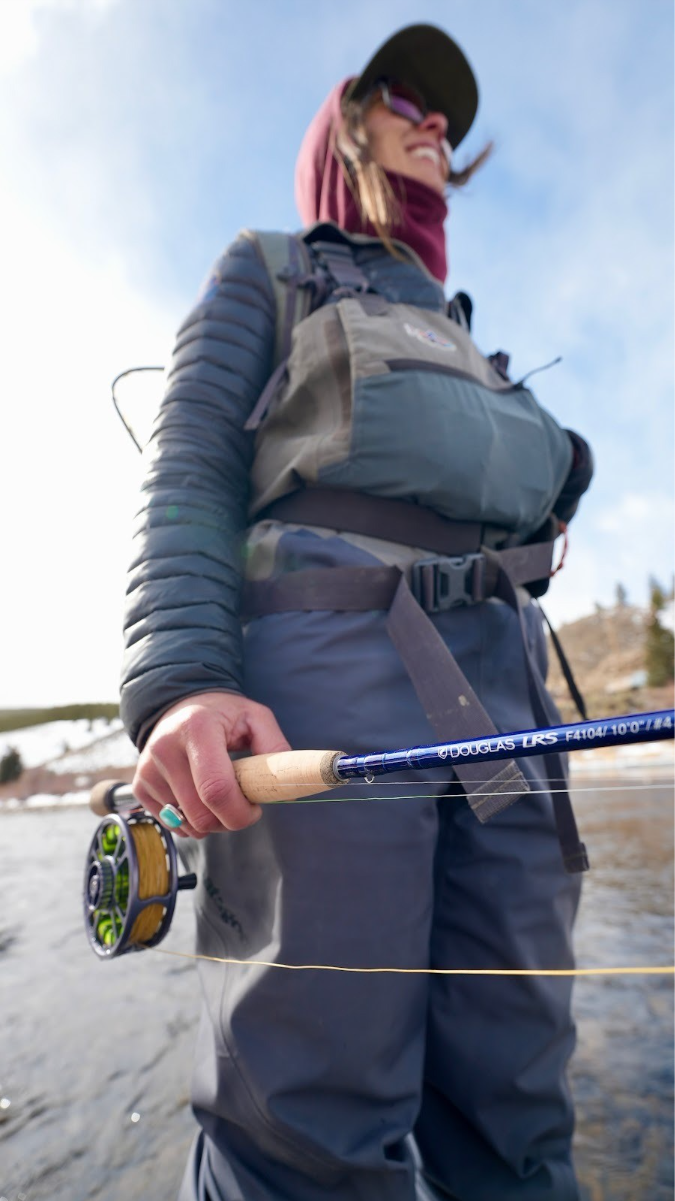
Dress Smart: Layering Systems that Work
If you’re going to spend hours in cold water, your clothing really matters. The goal is simple: stay warm, stay dry, and stay mobile. Here are the basics.
Base Layers: Your base layer moves moisture away from your skin. Merino wool or synthetic fabrics like polyester blends work well for this. Whatever you go with, avoid cotton; it absorbs moisture and holds it against your skin, losing all insulation, i.e. you’ll freeze.
Mid Layers: Mid layers trap warm air while letting moisture escape. Fleece or merino wool are good options. For extra cold days, it may make sense to pack a puffy as an extra insulating layer.
Outer Layers: This is where we want wind and water protection. Waders are of course a must. I like to check mine for holes before the winter is in full effect, especially the neoprene booties. I’ll spray the outside with soapy water, fill them with air, and look for any bubbles forming. Wet feet can be a day ender, so get ahead of it if you can. A wading jacket or rain jacket will also seal the deal on keeping you and all these meticulously packed on layers dry.
Other helpful winter items:
- Gloves: There are plenty of great gloves out there. Whatever you do, if you must do the grip n’ grin in the winter, or need to handle the fish at all, best to remove the gloves.
- Hand towel: Great to have something to dry the hands off with. Wet hands are immediately colder.
- Hand & toe warmers, neck gaiter, beanie, balaclavas: self-explanatory.
- Wading staff: Excellent tool for navigating icy river banks if you’re unsure of your footing, therefore also keeping you warm and dry.
The moral of the story is, you can’t fish well if you’re miserable. Dial in your layers and keep the right accessories on hand, and winter fishing stops being an endurance test and starts being enjoyable.
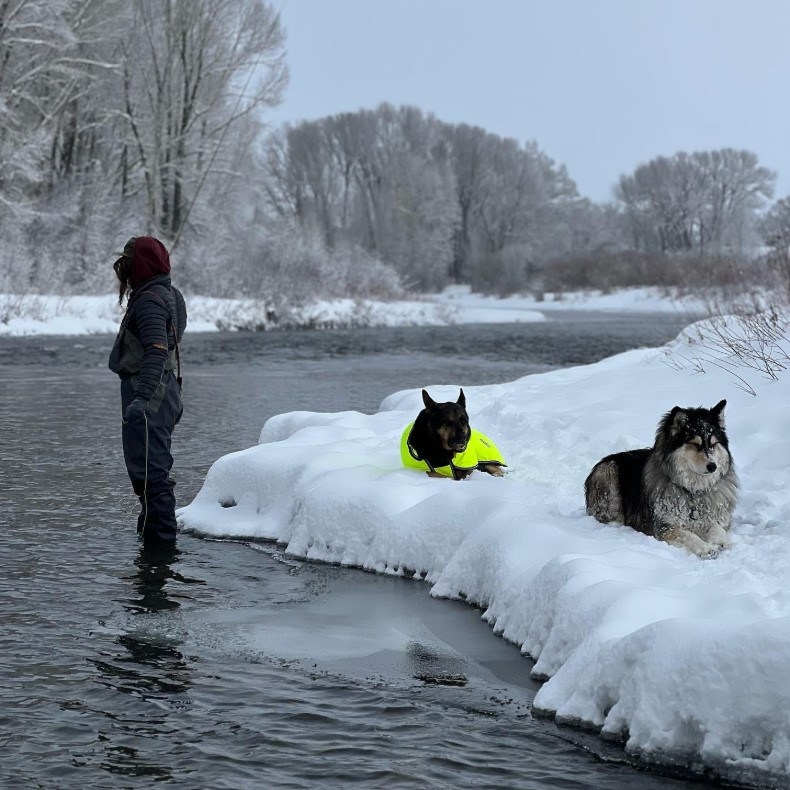
A good layering system makes all the difference for a good day on the water, for you and your fishing partners.
A Word on Fish Handling in the Winter
Winter fly fishing has its challenges, but it’s also incredibly rewarding. That being said, it’s also important to handle those fish with extra care.
Land fish quickly. Use the strongest tippet you can get away with so you can land fish quickly without exhausting them. Make sure they make an adequate recovery before letting them go too.
Keep them in the water. If you need to take a photo, consider keeping the fish submerged as much as possible, or lift out for only a few seconds.
Gloves off. Wet hands only. Gloves will strip the protective slime layer on your fish.
Go barbless. This goes for any time of year. Faster unhooking and less damage to the fish. Smash those barbs, it takes 2 seconds.
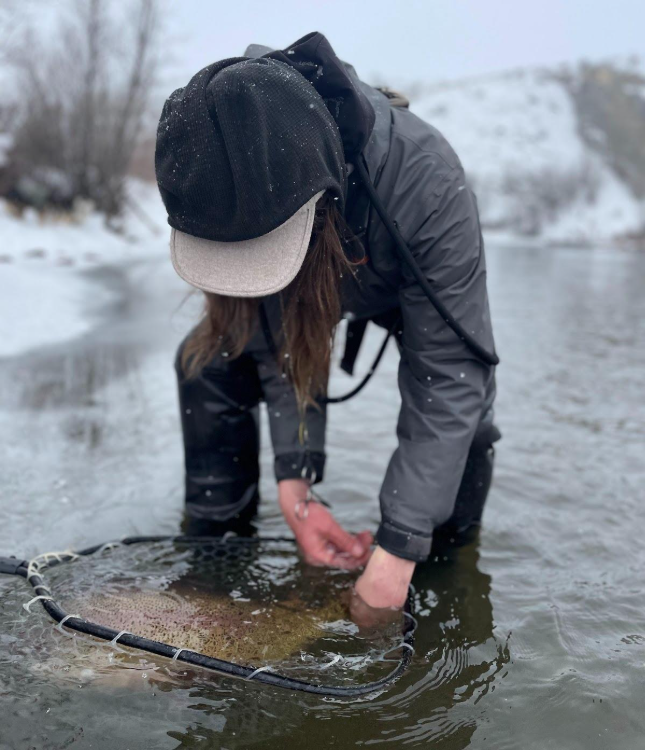 Keep your fish in the water as much as possible, and don’t forget to smash your barbs!
Conclusion
Winter changes the game, but it doesn’t end it. The fish are still there, and if you’re willing to adapt your approach and bundle up properly, you’ll find opportunities that simply don’t exist the rest of the year. It’s not about toughing it out, just preparation. The off-season is only off-season if you let it be.